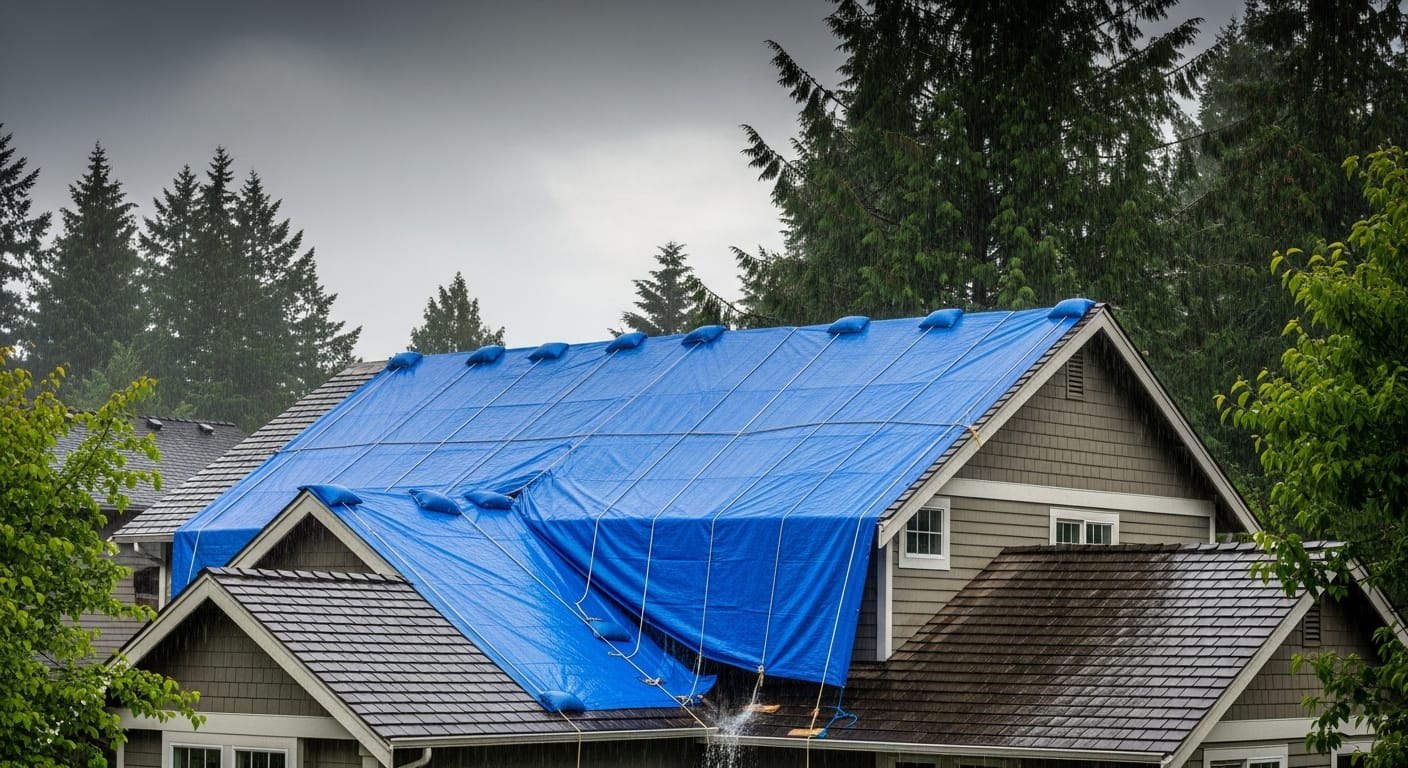
If your roof is actively leaking, start by placing buckets under drips, moving valuables away from the affected area, and taking photos for insurance. Do not climb onto a wet roof. Call a licensed roofing contractor immediately for emergency tarping and repair. Most emergency roof repairs in Seattle cost $300 to $1,500 depending on the extent of damage and whether temporary or permanent repair is needed.
For emergency service, call K Single Corp at (206) 659-4349. This guide walks you through what to do right now, what your insurance will cover, and how to choose the right contractor for the permanent repair.
What to Do Right Now (First 30 Minutes)
These steps minimize interior damage while you wait for professional help.
-
Place buckets and containers under active drips. Use the largest containers you have available. Empty them frequently if the leak is heavy.
-
Move furniture, electronics, and valuables away from the affected area. Water damage to electronics, antiques, important documents, or upholstered furniture compounds the cost of the incident quickly.
-
If water is pooling in the ceiling (visible bulge), puncture it. Use a screwdriver or sharp object to make a small hole at the lowest point of the bulge into a bucket. This prevents the entire ceiling from collapsing under the weight of trapped water.
-
Take photos and video of all damage. Capture the leak source from inside, the affected ceiling and walls, any damaged belongings, and the exterior of the roof from the ground. Insurance claims require documentation. Time-stamped photos from your phone work fine.
-
Turn off electricity in affected areas if water is near wiring. Wet electrical components are dangerous. If water has reached light fixtures, ceiling fans, or outlets, flip the breaker for that circuit before doing anything else.
-
Call a licensed roofing contractor for emergency service. K Single Corp at (206) 659-4349 dispatches same-day for active leaks across the Seattle area.
-
Do NOT climb onto the roof. Wet roofs are extremely dangerous. Even an experienced person can slip and fall. Wait for professionals with proper safety equipment.
Temporary Fixes to Minimize Damage
While you wait for professional help, a few additional steps can reduce damage.
Emergency Tarping
If you have access to a heavy-duty tarp and the conditions are safe (dry, low pitch, single-story, daylight), you can place a tarp over the damaged area to prevent further water intrusion. However, tarping a wet or steep roof is genuinely dangerous and often makes things worse if done incorrectly.
For most homeowners, the right call is to wait for a professional. Emergency tarping by K Single Corp typically deploys within 24 hours and costs $300 to $800 depending on roof access and tarp size required.
Interior Water Management
Route active leaks into appropriate containers. For sustained heavy leaks, consider:
- Placing a clean bucket directly under the drip
- Lining the bucket with a towel to reduce splash damage
- Using a garden hose or large funnel to direct water from the bucket out a window if necessary
- Keeping the area as dry as possible to slow mold growth
Roofing Sealant for Visible Cracks
If you can clearly see a small crack or hole on a single-story, low-pitch roof and the surface is dry, applying roofing sealant from a tube can provide a temporary fix. This is only appropriate when:
- You are not climbing on the roof itself (working from a stable ladder)
- The damage is small and visible
- The roof surface is dry
- You understand this is temporary and will need professional follow-up
For most situations, the safer move is to skip DIY sealant and wait for a professional. Improper sealant application can void warranties and complicate the eventual permanent repair.
Common Causes of Roof Leaks in Seattle
Understanding what is likely failing helps you describe the situation to your contractor.
Failed flashing. The most common leak source. Metal flashing around chimneys, skylights, walls, and valleys corrodes, separates, or loses its seal over time. Sustained rain in the PNW accelerates flashing failure.
Cracked pipe boots. The rubber gasket around plumbing vents has a typical lifespan of 10 to 15 years. After that, UV exposure and weather cycling cause cracks. Cracked pipe boots cause some of the most consistent, predictable leaks in older Seattle homes.
Missing or damaged shingles. Wind, impact from branches, age-related cracking, and moss growth all damage shingles. Once a shingle is gone or compromised, water enters the underlayment and finds its way down.
Clogged gutters. Gutters back up, water overflows behind the fascia, and travels along the eave into the wall or attic. This is the leak source homeowners are least likely to suspect because the symptom (interior staining or moisture) appears far from the actual cause (gutter overflow).
Moss damage. Moss roots lift shingle edges and create channels for water. Moss damage is uniquely common in Seattle and is typically the cause of leaks that appear suddenly in roofs that performed fine for years.
Worn flat roof membranes. TPO, EPDM, and modified bitumen all degrade over time. Seam failures, punctures, and ponding water all cause flat roof leaks.
Valley failures. Roof valleys channel large volumes of water during PNW storms. Worn valleys, debris-blocked valleys, and improperly installed valleys are common leak sources.
Wind-driven rain. Sustained heavy rain combined with wind can push water under shingles in places that would not leak in lighter conditions. PNW atmospheric river events are particularly hard on roofs.
Emergency Roof Repair vs Standard Repair
Three levels of intervention solve different scopes of damage.
Emergency tarping ($300 to $800): Temporary fix to stop active water intrusion. Tarp is installed over the damaged area to prevent further damage while permanent repair is scheduled. Typical duration: tarp stays for 3 to 14 days.
Standard permanent repair ($500 to $1,500): Full repair of localized damage. Replacing 5 to 20 shingles, repairing a section of flashing, replacing a pipe boot, sealing a small leak source. Scheduled during dry weather, typically 3 to 14 days after the initial emergency.
Major repair ($1,500 to $5,000): Larger scope work. Replacing extensive flashing, repairing valley failures, replacing a section of decking, comprehensive moss treatment with shingle work. Often requires multiple days on site.
Full replacement ($10,000 to $40,000): When the leak indicates systemic failure of an aging roof. Replacement is recommended when repair costs exceed 50% of replacement cost or when the roof is past 80% of expected lifespan. Scheduled 2 to 6 weeks out.
A professional inspection determines which level of intervention is appropriate for your situation. Many homeowners assume they need a major repair when a small targeted fix is sufficient. Others assume they can patch and continue when full replacement is the only sensible option.
Insurance and Emergency Roof Repairs
Most homeowners insurance policies cover sudden, accidental damage. The claim process matters.
What Is Typically Covered
- Storm damage (wind, hail, fallen trees)
- Sudden water intrusion from covered events
- Damage from fallen objects (branches, debris)
- Vandalism or impact damage
- Some weather-related events (varies by policy)
What Is Typically NOT Covered
- Wear and age (shingle lifespan, normal aging)
- Deferred maintenance (problems that should have been addressed earlier)
- Gradual deterioration
- Pre-existing damage
- Damage from animals (rodent or pest activity in many policies)
How to File a Claim
-
Document the damage immediately. Photos, video, and written notes about when you discovered the issue and what you observed. Time stamps matter.
-
File the claim within 24 to 72 hours of discovery. Most policies require prompt notice. Delayed filing can result in denial. Washington state generally allows up to one year from the date of damage for filing, but earlier is better.
-
Get a licensed contractor’s inspection and estimate. A K Single Corp written estimate provides the documentation insurance adjusters expect.
-
Schedule the adjuster visit. Have your contractor present if possible. The adjuster’s assessment can differ from the contractor’s, and the contractor can advocate for proper repair scope on your behalf.
-
Review the settlement carefully. Compare the adjuster’s allowed scope to the contractor’s estimate. If there are differences, ask for explanations and consider supplemental claims for hidden damage.
-
Approve repairs. Once you have approved the settlement, your contractor schedules the work.
-
Pay your deductible. The insurance company pays the rest directly to the contractor or to you (depending on policy and contractor preference).
Seattle Storm Patterns and Roof Damage
PNW storm seasons follow predictable patterns.
Fall and winter windstorms (October through March). The most common cause of emergency calls. Pacific systems bring sustained winds of 30 to 60 mph with gusts of 70+ mph during major events. Wind damage typically lifts shingles, damages flashing, and brings down branches.
Heavy rain events during atmospheric rivers. Periodic events that dump 2 to 5+ inches of rain in 24 to 48 hours. These reveal weak spots that perform fine in normal rain. Pipe boot cracks, flashing failures, and clogged gutter overflows all show up during atmospheric rivers.
Spring storms (March through May). Lighter than fall storms but still cause damage. Wet, heavy spring snows occasionally. More common: wind events that follow winter weakening of materials.
Summer (June through September). Generally dry. Occasional summer thunderstorms cause damage but emergencies are rare.
Snow and ice (rare but significant). Seattle gets a few inches of snow most winters. Heavy snow events are rare but cause significant damage when they happen, especially to flat roofs and older shingle roofs.
PNW’s constant moisture compounds storm damage. Small wind damage that might not leak in a drier climate often leaks within days in Seattle’s frequent rain.
Choosing an Emergency Roofer in Seattle
The contractor you choose during an emergency matters as much as the repair itself.
Verify License and Insurance
In Washington state, all roofing contractors must hold an active contractor license. Verify any contractor at lni.wa.gov. K Single Corp’s license number is KSINGSC842B3. License verification takes 30 seconds and protects you from unlicensed work.
Beware of Storm Chasers
Storm chaser contractors are out-of-state crews that arrive after major storms, going door to door offering quick repairs at “great prices.” Red flags:
- They show up unannounced after a storm
- They pressure you to sign immediately
- They offer to “cover your deductible” (this is insurance fraud)
- They have no local address or local references
- They want payment upfront before work begins
- Their license, if they have one, is from another state
Reputable local contractors do not knock on doors after storms. They are too busy with their existing customers. If someone shows up unannounced offering emergency repair, send them away.
Ask About Emergency Response Time
Quality local contractors maintain emergency response capability. Ask:
- How quickly can you respond?
- Do you provide same-day emergency tarping?
- Can you work directly with my insurance company?
- Do you provide a written estimate before work begins?
Get a Written Estimate
Even in an emergency, get the scope and cost in writing before authorizing work. A reputable contractor will provide a written estimate quickly, often via email or text within an hour of inspection.
Check Reviews
A quick Google search for any contractor reveals patterns. Reputable companies have hundreds of reviews accumulated over years. Storm chasers often have few or no reviews, or recent fake reviews.
Emergency Action Checklist
Call K Single Corp for Emergency Roof Repair
K Single Corp provides 24/7 emergency response for active roof leaks across King, Snohomish, and Pierce counties. We dispatch same-day for active leaks during business hours and as quickly as possible during nights and weekends. We work directly with your insurance company and provide written estimates before any work begins.
Call (206) 659-4349 for emergency response. For non-urgent situations, schedule an inspection online.
For more on related topics, see our roof repair service page, our companion guides on how to find a roof leak, storm damage roof repair, and DIY vs professional roof repair, and our broader guide on common roof problems in Seattle.