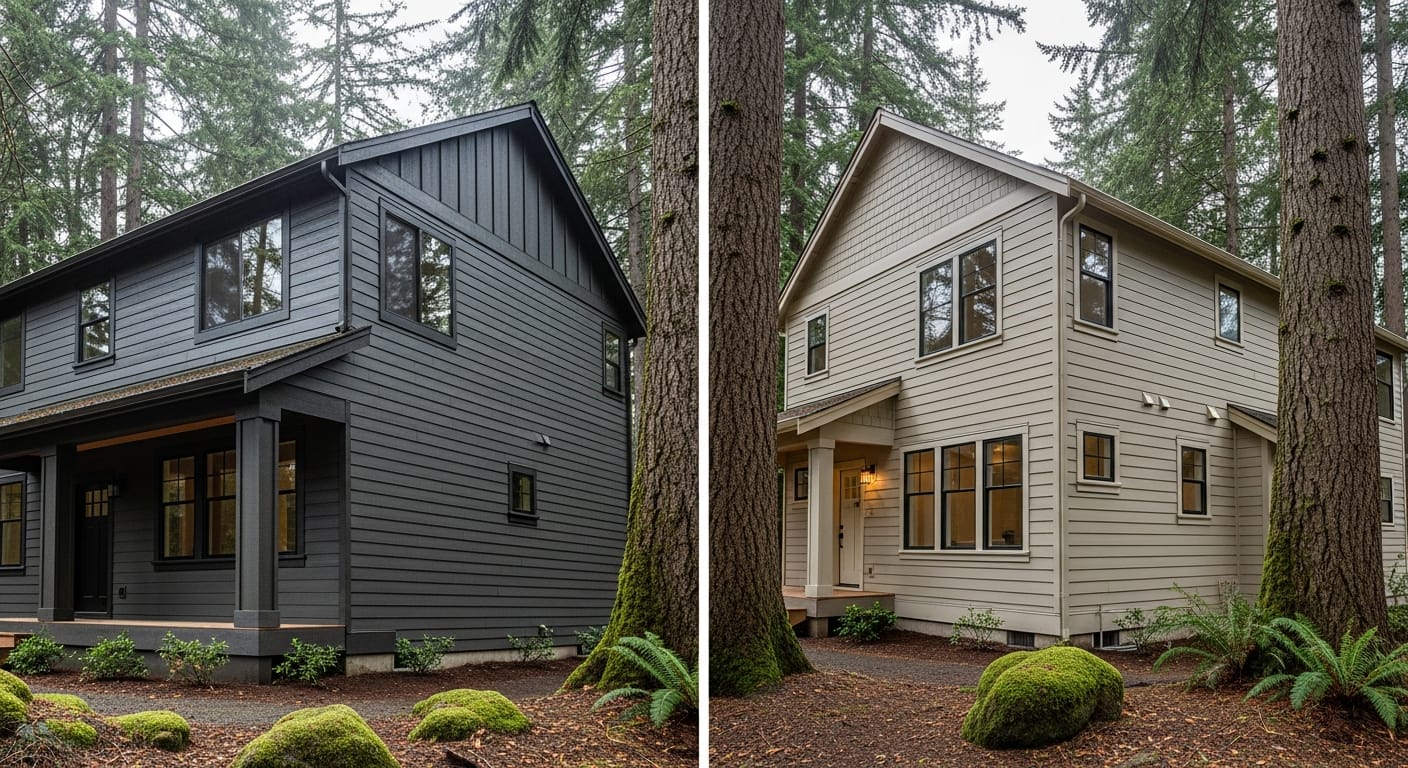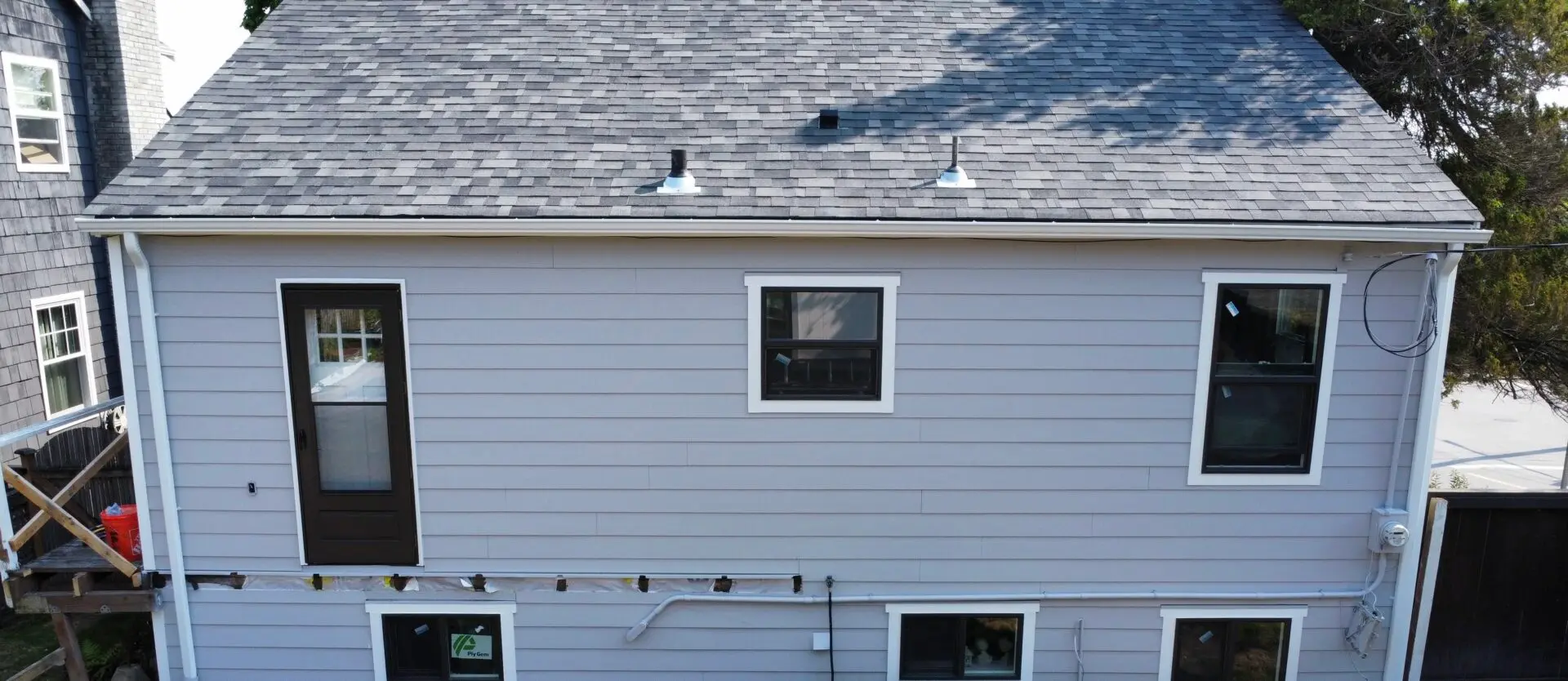

Siding maintenance in the Pacific Northwest requires cleaning once or twice per year, annual caulking inspection, and moss or algae treatment every spring. The specific maintenance routine depends on your siding material: vinyl needs the least effort, cedar needs the most, and fiber cement falls in between. Following a seasonal schedule prevents the moisture damage, mold, and premature aging that PNW weather accelerates.
This guide covers material-specific care, a Seattle seasonal calendar, and clear guidance on when maintenance is no longer enough.
Why Siding Maintenance Matters More in the PNW
Seattle’s climate creates conditions that accelerate siding failure faster than national averages suggest.
150+ rain days per year. Sustained moisture exposure means siding never fully dries out during fall, winter, and spring. Materials that handle 100 rain days fine can fail under 200+ rain days.
Limited direct sunlight. PNW siding stays damp longer because the limited UV exposure does not “bake out” surface moisture between rain events. This promotes moss, algae, and mildew growth.
High humidity year-round. Even on dry days, indoor and outdoor humidity stays elevated. Moisture in wall cavities cannot escape efficiently if siding fails to ventilate properly.
Moderate temperatures. Less freeze-thaw stress than some climates, but also less thermal cycling that helps materials shed moisture.
Result: Neglected siding in the PNW typically fails 5 to 10 years before its rated lifespan. Well-maintained siding often outlasts its rated lifespan because care prevents the conditions that cause early failure.
Most siding warranty claims are denied because of inadequate documented maintenance. Keep records.
Maintenance by Material Type
Vinyl Siding
The lowest-maintenance siding option, but not zero maintenance.
- Cleaning: Soft wash with garden hose and mild detergent 1 to 2 times per year. Never exceed 1,500 PSI if pressure washing.
- Inspection: Check for cracks, warping, and loose panels annually.
- Caulking: Inspect caulk around windows, doors, and trim transitions every spring.
- Painting: Vinyl does not require painting, though it can be painted to change color.
- PNW lifespan with maintenance: 25 to 35 years. Without: 18 to 25 years.
Fiber Cement Siding (James Hardie, LP, Allura)
Moderate maintenance with high payoff.
- Cleaning: Soft wash with water and mild detergent annually.
- Paint inspection: Check for fading, chalking, peeling. Repaint every 12 to 18 years for field-painted, 15 to 20 for factory-finish.
- Caulking: Inspect all joints, corners, and window/door transitions annually. Recaulk failed sections.
- Edge protection: Touch up chips or exposed edges promptly. Cut edges absorb water if not sealed.
- PNW lifespan with maintenance: 35 to 50 years. Without: 25 to 35 years.
Cedar Siding
The highest-maintenance option in the PNW.
- Cleaning: Soft wash only. Never pressure wash cedar (splinters and damages the wood).
- Moss treatment: Spring application of siding-safe moss killer, especially on north-facing walls.
- Stain or seal: Every 3 to 5 years.
- Paint: If painted, repaint every 5 to 7 years.
- Inspection: Check for splitting, cupping, warping, and rot annually.
- Replacement: Replace individual damaged boards promptly to prevent moisture spread.
- PNW lifespan with maintenance: 25 to 40 years. Without: 15 to 22 years.
Engineered Wood (LP SmartSide)
Falls between cedar and fiber cement in maintenance demands.
- Cleaning: Soft wash annually.
- Paint or stain: Every 7 to 10 years in PNW conditions.
- Caulking: Annual inspection, same as fiber cement.
- Edge inspection: Check cut edges and joints for moisture penetration.
- Sprinkler management: Keep irrigation aimed away from siding (chronic moisture source).
- PNW lifespan with maintenance: 28 to 35 years. Without: 18 to 25 years.
Seasonal Siding Maintenance Calendar for the PNW
Seattle Siding Maintenance Calendar
Winter
- Monitor for storm damage
- Spot-clean if needed
- Monitor for storm damage
- Plan spring maintenance schedule
- Monitor for damage
- Plan next year's maintenance
Spring
- Post-winter inspection
- Check for storm damage and failed caulking
- Spring soft wash
- Moss and algae treatment
- Touch up paint/stain on exposed areas
- Final spring inspection
- Begin scheduling summer projects
Summer
- Major maintenance season begins
- Repainting, restaining, recaulking
- Peak season for siding work
- Board replacement, caulking, painting
- Last full month for major maintenance
- Complete projects before fall rains
Fall
- Pre-winter inspection
- Final caulking touch-ups
- Monitor only
- Clear gutter debris hitting siding
- Monitor only
- Check after storms
Cleaning Methods: Soft Wash vs Pressure Wash
This is the most common siding mistake we see in the PNW.
Soft wash uses low-pressure water (typically under 1,000 PSI) combined with cleaning solution applied through a brush or low-pressure sprayer. It removes 95% of dirt, mildew, and biological growth safely.
Pressure wash uses high-pressure water (1,500 to 3,000 PSI). It is faster but more aggressive. Pressure washing can:
- Force water behind siding panels into the wall cavity
- Strip paint or stain
- Crack fiber cement
- Splinter cedar
- Damage caulking and seals
- Push debris into electrical fixtures and penetrations
Recommended approach: Soft wash all siding types. If you must use pressure, stay below 1,500 PSI, hold the wand at least 12 inches from the surface, and never spray directly into seams or penetrations.
DIY soft wash method:
- Mix cleaning solution: 1 cup OxiClean or TSP substitute per gallon of water
- Apply with a pump sprayer, soft-bristle brush, or low-pressure attachment
- Let solution dwell 5 to 10 minutes
- Scrub gently with a soft brush
- Rinse with garden hose at normal pressure
- Work top-down to avoid streaking
Professional soft wash: $300 to $600 for an average Seattle home. Worth it for multi-story homes or heavily soiled siding.
Moss and Algae Removal for PNW Siding
Moss and algae are universal in Seattle. Prevention beats removal.
Why It Grows on Siding
- Shade: North-facing walls and walls under trees stay damp longer
- Moisture: Constant PNW humidity provides ideal growing conditions
- Limited UV: Reduces natural disinfection that occurs in sunnier climates
- Surface texture: Rough surfaces (cedar, textured fiber cement) hold moisture longer
Removal Process
- Apply moss killer. Siding-safe products like Wet & Forget, Moss Out, or oxygen bleach solutions work well.
- Dwell time. Let the product sit 15 to 30 minutes.
- Gentle scrub. Use a soft brush in circular motions. Don’t scrape aggressively.
- Rinse thoroughly. Low-pressure water from garden hose.
- Repeat if needed. Severe growth may need a second application after a week.
Prevention
- Zinc or copper strips. Install along the top edge of affected walls. Rainwater dissolves trace amounts of zinc/copper that inhibit growth downstream.
- Trim vegetation. Cut back trees and shrubs touching or shading siding.
- Improve drainage. Ensure gutters drain away from the house, not down the wall.
- Annual treatment. Light moss application each spring prevents establishment.
When Moss Has Won
If moss has penetrated deeply into siding (especially cedar), simple removal is not enough. Damaged boards need replacement. Embedded moss roots can rot the underlying wood even after surface removal.
Caulking Inspection and Replacement
Failing caulk is the #1 moisture entry point on siding, ahead of panel damage.
Where to Check
- All joints where siding meets windows
- All joints where siding meets doors
- Corner trim transitions
- Where siding meets the foundation
- Where siding meets the roof
- Around exterior penetrations (electrical, plumbing, HVAC)
- Anywhere two pieces of siding meet at right angles
What to Look For
- Cracking (visible splits in the caulk)
- Shrinking (caulk pulled away from one or both sides of the joint)
- Missing caulk entirely (wash-out from years of weather)
- Discoloration (often indicates caulk failure)
- Soft, gummy, or peeling caulk (typically failed adhesion)
Replacement Process
- Remove failed caulk. Use a putty knife or caulk removal tool. Get all the old material out.
- Clean the joint. Wipe with a clean rag. Let dry fully.
- Apply new caulk. Use high-quality exterior siliconized acrylic or polyurethane caulk rated for PNW temperatures.
- Tool the bead. Smooth with a wet finger or caulk tool for clean appearance.
- Allow cure time. Most caulks need 24 hours before exposure to rain.
A full caulking inspection and touch-up takes 2 to 4 hours for an average home. Best done during dry weather (June through August in Seattle).
Annual Siding Inspection Checklist
When Maintenance Is Not Enough
Some signs indicate maintenance has reached the point of diminishing returns.
Widespread rot. When more than 10 to 15% of boards on cedar or engineered wood show rot, full replacement is more economical than continued repair.
Moisture behind siding. Soft spots, warping, or visible moisture on the underlying sheathing means water is penetrating the siding system. Patch repairs do not address the underlying failure.
Structural damage. Damage that extends beyond the siding into framing or structural elements requires more than maintenance.
Paint will not hold. When new paint peels within 2 to 3 years, the siding itself is failing or moisture is preventing proper adhesion.
Energy bills increasing. Failed siding allows air infiltration that raises heating costs. Modern siding with proper insulation barrier can reduce heating costs by 10 to 20%.
Maintenance costs approaching replacement amortization. When you are spending $1,000+ per year on maintenance for siding that will fail in 5 years, replacement makes more financial sense.
Repair costs over 30 to 40% of full replacement. The classic threshold. When you are about to spend $8,000 on repair for siding that would cost $20,000 to replace, replacement usually wins on lifecycle cost.
Schedule a Free Siding Inspection
K Single Corp provides free siding inspections paired with estimates across King, Snohomish, and Pierce counties. We help homeowners distinguish between maintenance-only situations, targeted repairs, and full replacement candidates with honest assessments.
Schedule your free inspection or call (206) 659-4349. For interactive cost estimates, try our siding calculator.
For more on related topics, see our siding service page, our companion guides on best siding materials for Pacific Northwest homes, signs you need new siding, and fiber cement vs vinyl siding for Seattle, and our existing post on premium siding replacement cost in PNW.