The most common signs you need a new roof include curling or buckling shingles, granule buildup in gutters, visible daylight in the attic, water stains on ceilings, and a roof that is over 20 years old. If you notice two or more of these warning signs, it is time to schedule a professional roof inspection before minor issues become major water damage.
Many Seattle homeowners wait too long because a roof problem is not always obvious from the ground. Here are the eight signs that experienced roofing contractors look for, along with what each one means for your home.
8 Warning Signs You Need a New Roof
1. Curling, Buckling, or Cracking Shingles
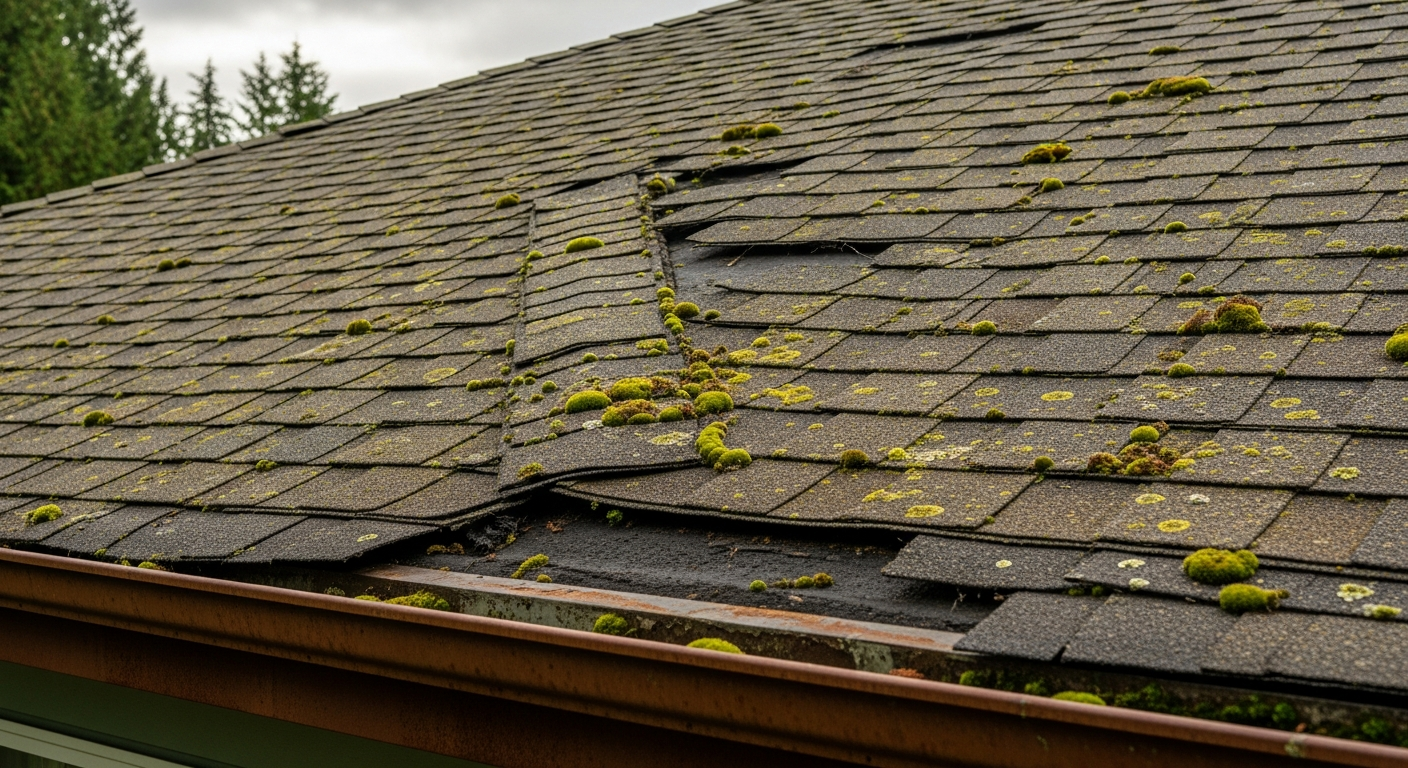
Shingles that curl at the edges, buckle in the middle, or show visible cracking have reached the end of their useful life. This happens when the asphalt dries out and loses flexibility, a process that Seattle’s wet-dry cycling accelerates.
Curling shingles cannot seal properly against wind-driven rain. Once they start lifting, water gets underneath and reaches the decking. A few curled shingles in one area might be repairable, but widespread curling across the roof means replacement is the right call.
2. Granule Loss in Your Gutters
Composition shingles are coated with ceramic granules that protect the asphalt underneath from UV damage and rain. As shingles age, these granules loosen and wash into gutters during rainstorms.
Some granule loss is normal on new roofs (manufacturing residue). But if you are finding piles of coarse, sand-like material in your gutters or at the base of your downspouts after rain, your shingles are losing their protective coating. Once granules are gone, the exposed asphalt deteriorates rapidly.

3. Daylight Visible Through Roof Boards
Go into your attic on a sunny day and turn off all lights. If you can see pinpoints of daylight coming through the roof boards, water is getting in through those same openings.
While you are in the attic, also check for dark stains on the underside of the decking, which indicate past water intrusion even if the leak has temporarily stopped.
4. Water Stains on Interior Ceilings or Walls
Brown or yellowish stains on your ceilings or upper walls almost always trace back to a roof leak. The tricky part is that water can travel along rafters and sheathing before dripping down, so the stain may not be directly below the leak.
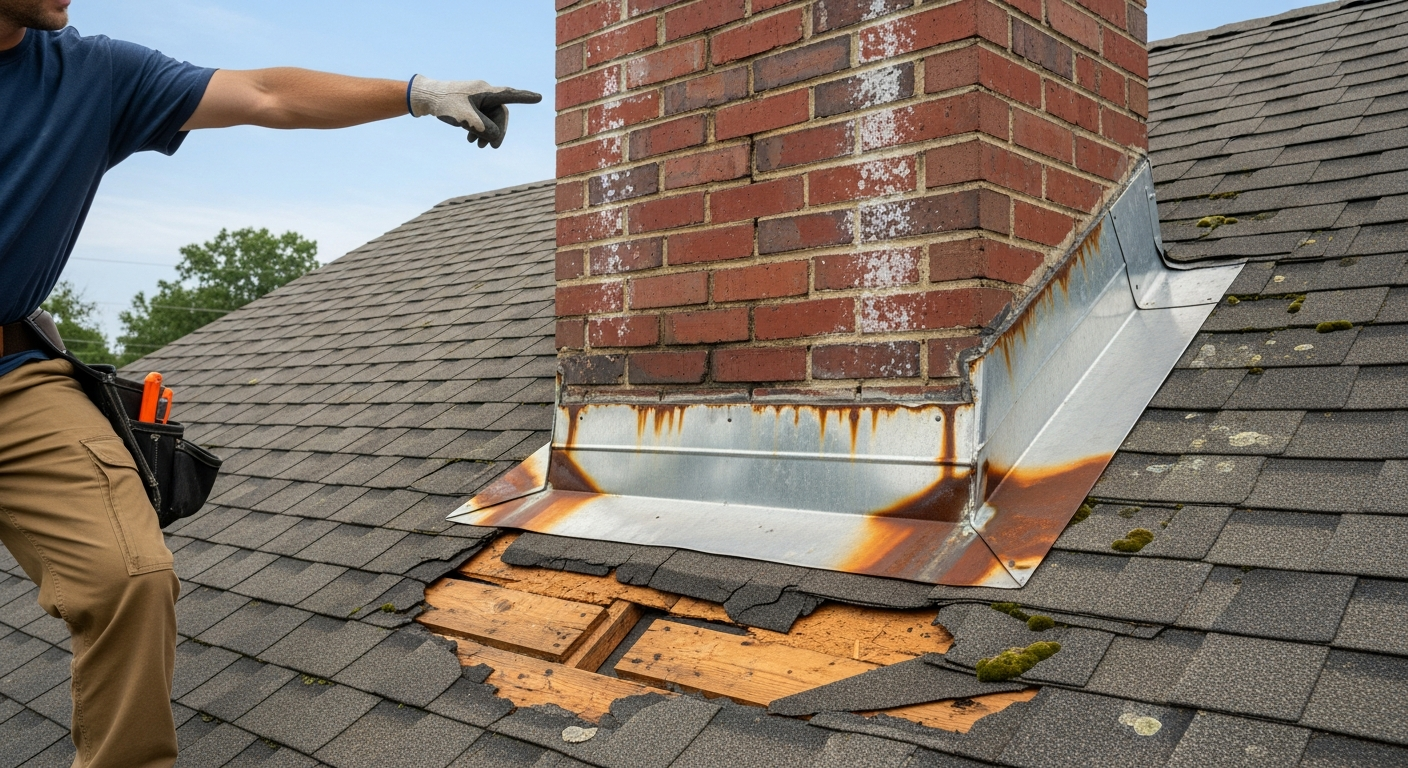
A single stain from an isolated incident (a fallen branch, a damaged flashing) is usually repairable. Multiple stains, growing stains, or stains that reappear after repair indicate a systemic problem that replacement will solve more reliably than patching.
5. Your Roof Is Over 20 Years Old
Age alone is one of the most reliable indicators. Even if your roof looks acceptable from the ground, a composition shingle roof in Seattle’s climate starts declining after 20 years. The constant moisture cycling, UV exposure, and temperature swings take a cumulative toll that is not always visible on the surface.
If your roof is approaching or past the 20-year mark, schedule an annual professional inspection. A trained eye can spot early-stage problems that give you time to plan and budget rather than react to an emergency.
6. Sagging Roof Sections
A sagging roof line is a structural concern, not just a cosmetic one. Sagging indicates that the decking, rafters, or trusses underneath have been compromised by moisture, rot, or inadequate support.
Sagging is more common in older Seattle homes that may have had ventilation problems, allowing moisture to accumulate in the attic and rot the structural components over decades.
7. Rising Energy Bills
Your roof is a major component of your home’s thermal envelope. When roofing materials deteriorate, they lose their ability to reflect heat and support proper insulation. Gaps from curled or missing shingles allow conditioned air to escape and outside air to infiltrate.
If your heating bills have been creeping up and your HVAC system is working fine, your roof may be the culprit. A new roof with proper ventilation and modern underlayment can reduce energy costs by $200 to $600 per year.
8. Moss and Algae Have Taken Over
Some moss on a PNW roof is normal and manageable with regular cleaning. But when moss has spread across the entire roof, grown thick enough to lift shingle edges, or penetrated under the shingle tabs, the damage may be too far gone for cleaning alone.
Heavy moss growth traps moisture against the shingle surface, accelerating granule loss and rot. If moss has been left untreated for years and shingles are soft or crumbling underneath, replacement is the only reliable fix.
What to Do If You See These Signs
Spotting one sign does not automatically mean you need a full replacement. But if you are seeing two or more of these issues, a professional inspection will give you a clear answer.
Step 1: Schedule a professional inspection. An experienced roofer can assess conditions that are not visible from the ground, including decking condition, ventilation performance, and flashing integrity.
Step 2: Get a clear diagnosis. A good contractor will tell you honestly whether you need a repair or a replacement. They will explain why and show you the evidence.
Step 3: Get a written estimate. If replacement is recommended, get a detailed estimate that specifies materials, scope, timeline, and warranty terms. Get multiple bids and compare them carefully.
Step 4: Plan your timing. Unless you have an active leak or structural issue, you typically have time to plan. The best installation conditions in Seattle are late spring through early fall.
Free Roof Inspection
K Single Corp provides free roof inspections for homeowners across the greater Seattle area. We will give you an honest assessment of your roof’s condition and a clear recommendation. No pressure, no obligation. Contact us to schedule your inspection or call (206) 659-4349.