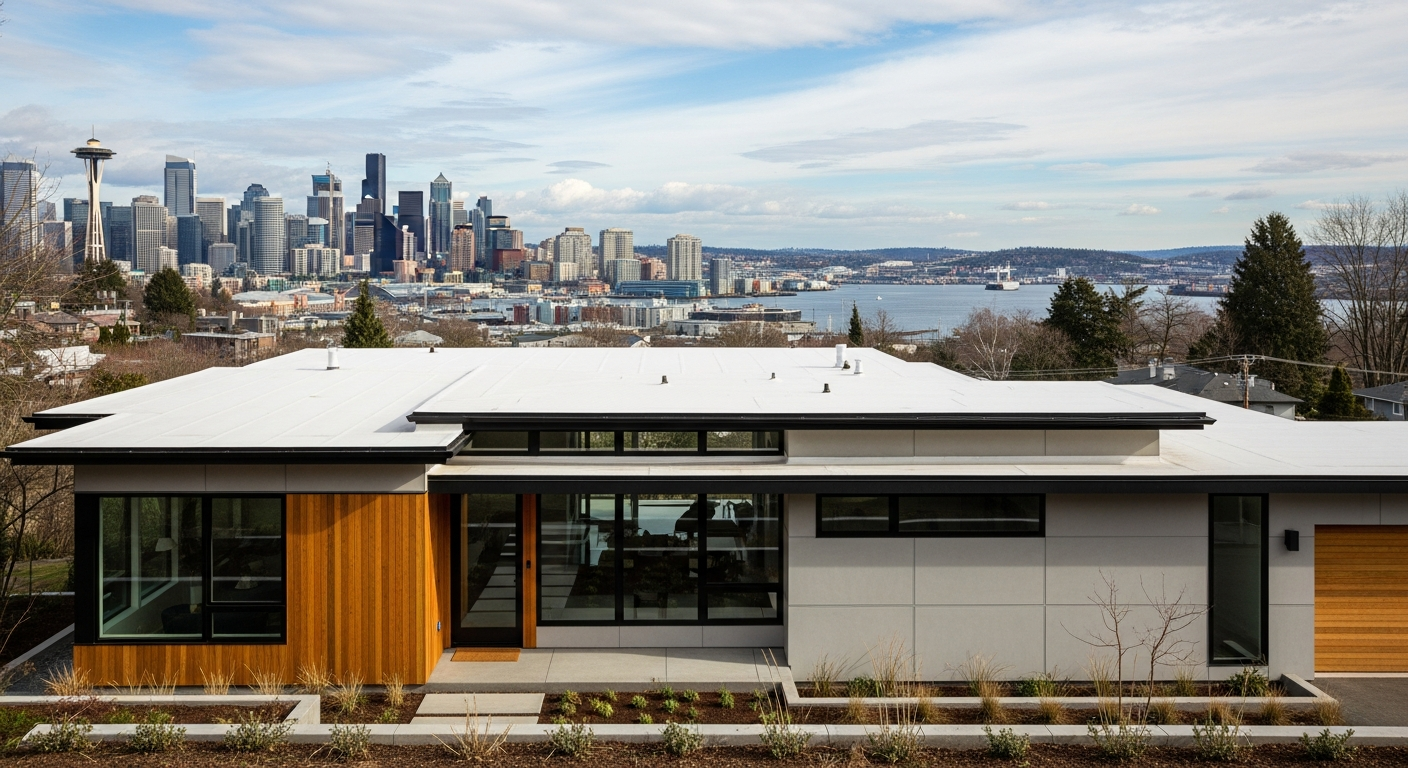
A flat roof is not actually flat. It has a slight slope (typically 1/4 inch per foot) that directs water toward drains. Modern flat roof systems using TPO or PVC membranes perform well in Seattle’s rainy climate when properly designed and maintained. Flat roofs cost 20% to 40% less per square foot than pitched roofs and create usable rooftop space that a sloped roof cannot offer.
That said, flat roofs come with tradeoffs that every homeowner should understand before committing, especially in the Pacific Northwest.
Roof Pitch and Flat Roofing Guide
The Pros: Why Flat Roofs Make Sense
1. Lower Cost Per Square Foot
Flat roofs cost $5 to $12 per square foot installed, compared to $7 to $15+ for pitched asphalt shingle roofs. The savings come from simpler framing, less material waste, and faster installation. For additions, garages, and sections where a pitched roof is impractical, flat roofing is significantly more affordable.
2. Usable Rooftop Space
This is the standout advantage of flat roofs. A flat surface can support a rooftop deck, patio furniture, container garden, or solar panel array. In Seattle’s competitive housing market where lot sizes are shrinking, rooftop outdoor space is an increasingly valuable feature.
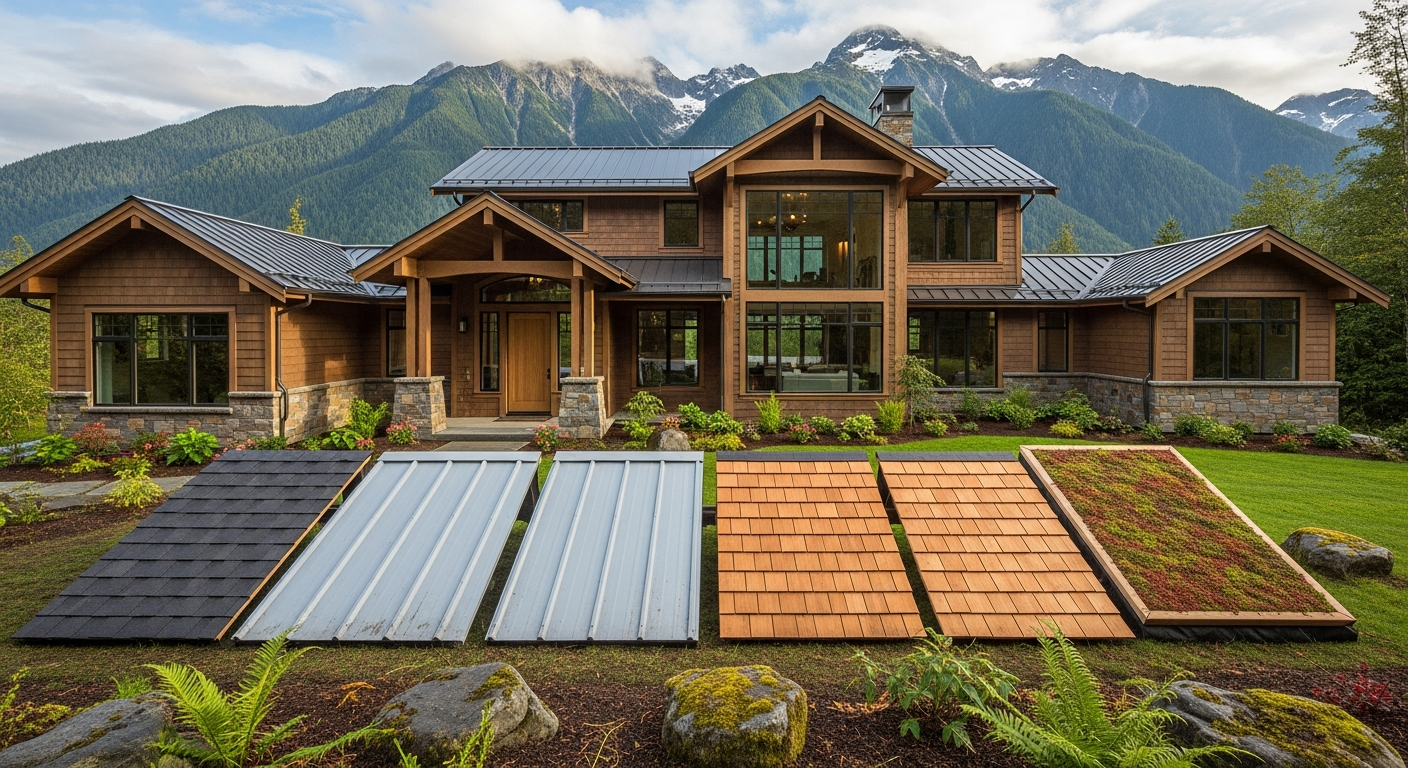
Modern waterproofing membranes are designed to handle foot traffic and the added weight of deck materials, planters, and furniture. Green roof systems (living roofs with soil and vegetation) are also growing in popularity throughout the Puget Sound region.
3. Modern Aesthetic
Flat roofs define the clean horizontal lines of modern, mid-century modern, and contemporary architecture. If your home design calls for sharp geometry and minimal rooflines, a flat roof delivers the look that a pitched roof simply cannot.
In neighborhoods like Fremont, Ballard, and Capitol Hill where modern infill construction is common, flat roofs are often the architecturally appropriate choice.
4. Easy Access for Maintenance and Equipment
HVAC units, satellite dishes, and solar panels sit naturally on flat roofs without the complex mounting brackets and safety concerns of pitched installations. Maintenance access is straightforward since workers can walk the surface without fall protection in most cases (depending on height regulations).
5. Simpler Construction for Additions
When adding a room, extending a kitchen, or building out over a porch, a flat roof is often the most practical framing approach. It avoids the complexity of tying new pitched framing into existing rooflines and keeps the addition’s profile lower.
The Cons: What to Watch Out For
1. Drainage Is Everything
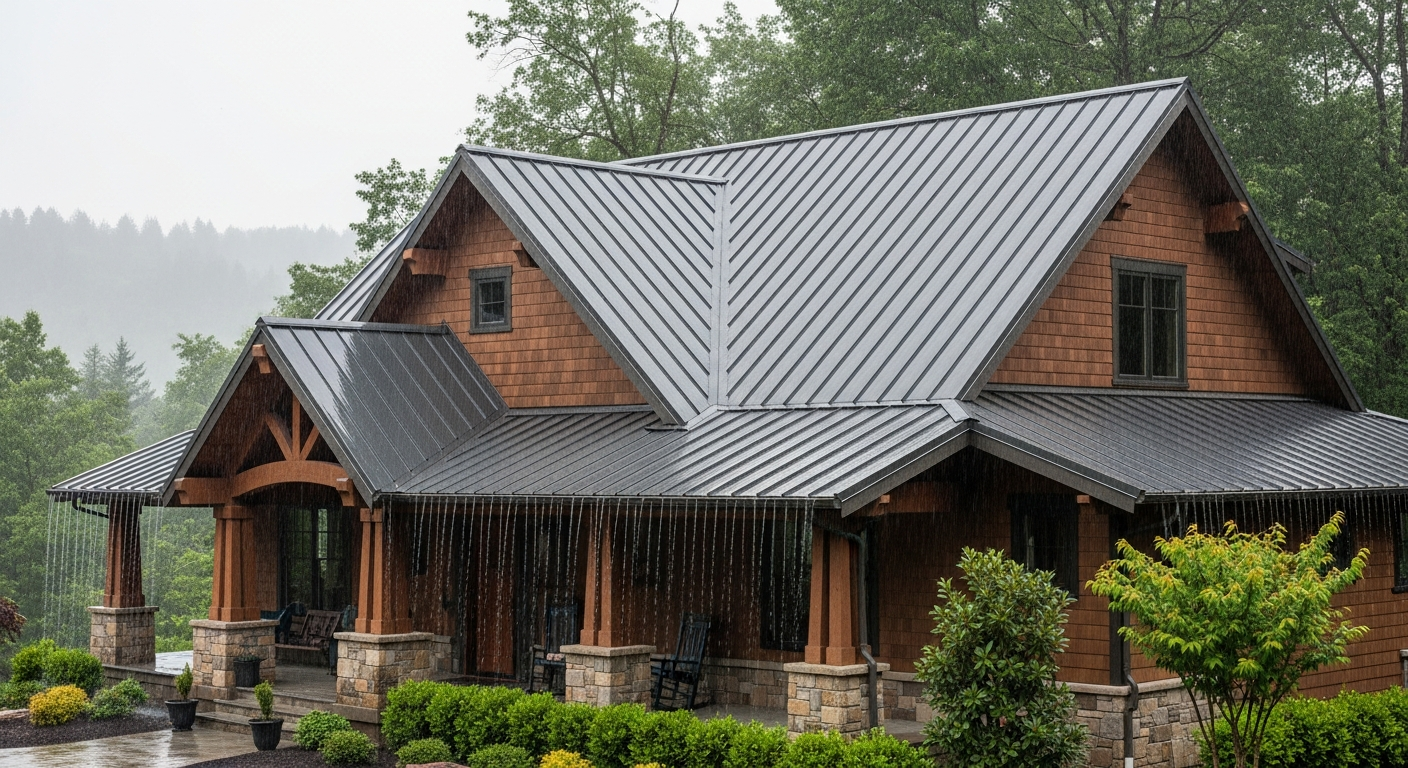
This is the single biggest concern with flat roofs in the Pacific Northwest. Seattle averages 37 inches of rain across 152 rainy days per year. Every drop of that water needs a clear path off the roof. If drains clog, if the slope is insufficient, or if the membrane develops a low spot, water pools.
Proper drainage design means the roof should have a minimum slope of 1/4 inch per foot toward drain locations, internal drains or scuppers should be sized for peak rainfall intensity, and backup overflow drains (secondary drains set slightly higher) should be present in case primary drains clog.
2. Shorter Lifespan Than Pitched Options
Most flat roof membranes last 20 to 30 years for TPO/PVC and 15 to 25 years for EPDM. Compare that to 25 to 30 years for architectural shingles on a pitched roof or 40 to 70 years for standing seam metal. You will likely reroof a flat section more often over the life of a building.
3. More Frequent Maintenance Required
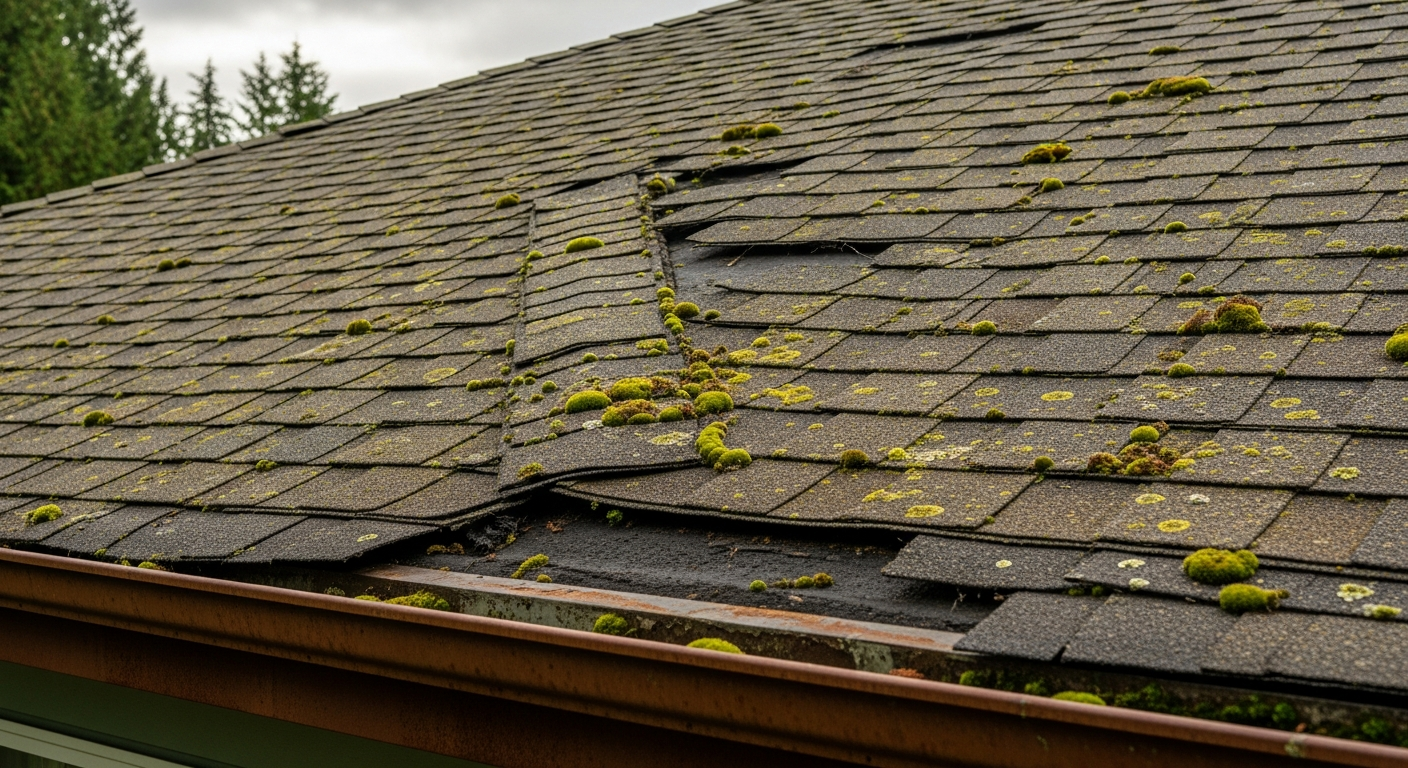
Flat roofs need more attention than pitched roofs. In Seattle, plan on quarterly drain clearing (fall and winter especially), twice-yearly professional inspections, and prompt debris removal after storms. A pitched roof sheds most debris naturally. A flat roof holds it.
4. Limited Insulation Options
Flat roofs have less cavity space for insulation compared to pitched roofs with attic space. This can affect energy efficiency, especially in Seattle’s cold, wet winters. Rigid foam insulation installed above the deck is the standard solution, but it adds cost and complexity.
5. Vulnerability to Foot Traffic Damage
While flat roofs are walkable, repeated foot traffic can damage membrane surfaces. Every HVAC service call, every gutter cleaning visit, every time someone goes up to adjust an antenna creates wear. Traffic pads and walkway rolls protect the membrane in high-traffic areas but need to be planned during installation.
6. Resale Perception
Some home buyers in the Seattle market view flat roofs negatively, associating them with leaks and maintenance problems. This perception is often based on outdated experience with older materials. Modern TPO and PVC systems are far more reliable than the built-up and tar-and-gravel roofs of previous decades. However, the perception can still affect buyer enthusiasm.
Best Flat Roof Materials for Seattle
TPO (Thermoplastic Polyolefin)
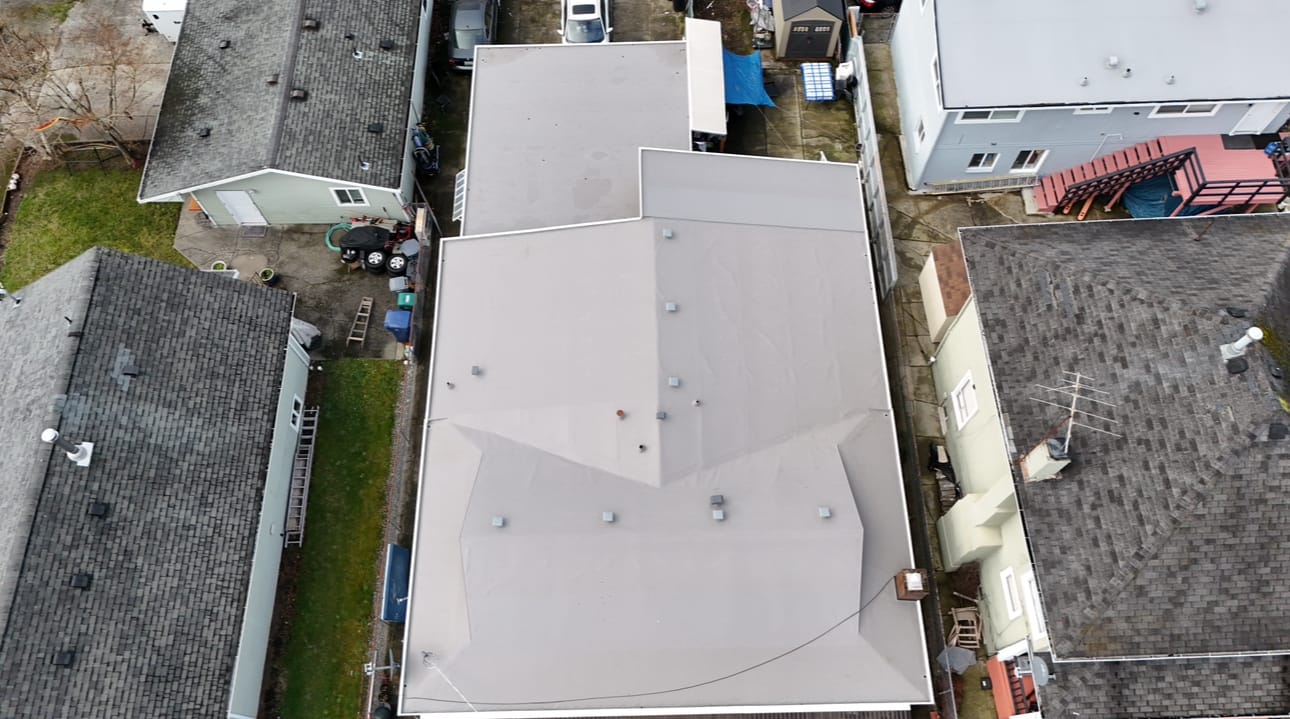
TPO is the most popular flat roofing material in the Pacific Northwest. It is a single-ply membrane that is heat-welded at seams, creating a monolithic waterproof surface. TPO resists UV, ozone, and chemical exposure. It comes in white, tan, and gray, with white being the most popular for its energy efficiency (reflects heat).
Cost: $6 to $9 per square foot installed
Lifespan: 20 to 30 years
PVC (Polyvinyl Chloride)
PVC membranes are similar to TPO but slightly more durable and chemical-resistant. They are the preferred choice for roofs that will have rooftop equipment, grease exhaust (restaurants), or heavy foot traffic. PVC costs slightly more than TPO but offers marginally better longevity.
Cost: $7 to $12 per square foot installed
Lifespan: 20 to 30 years
EPDM (Ethylene Propylene Diene Terpolymer)
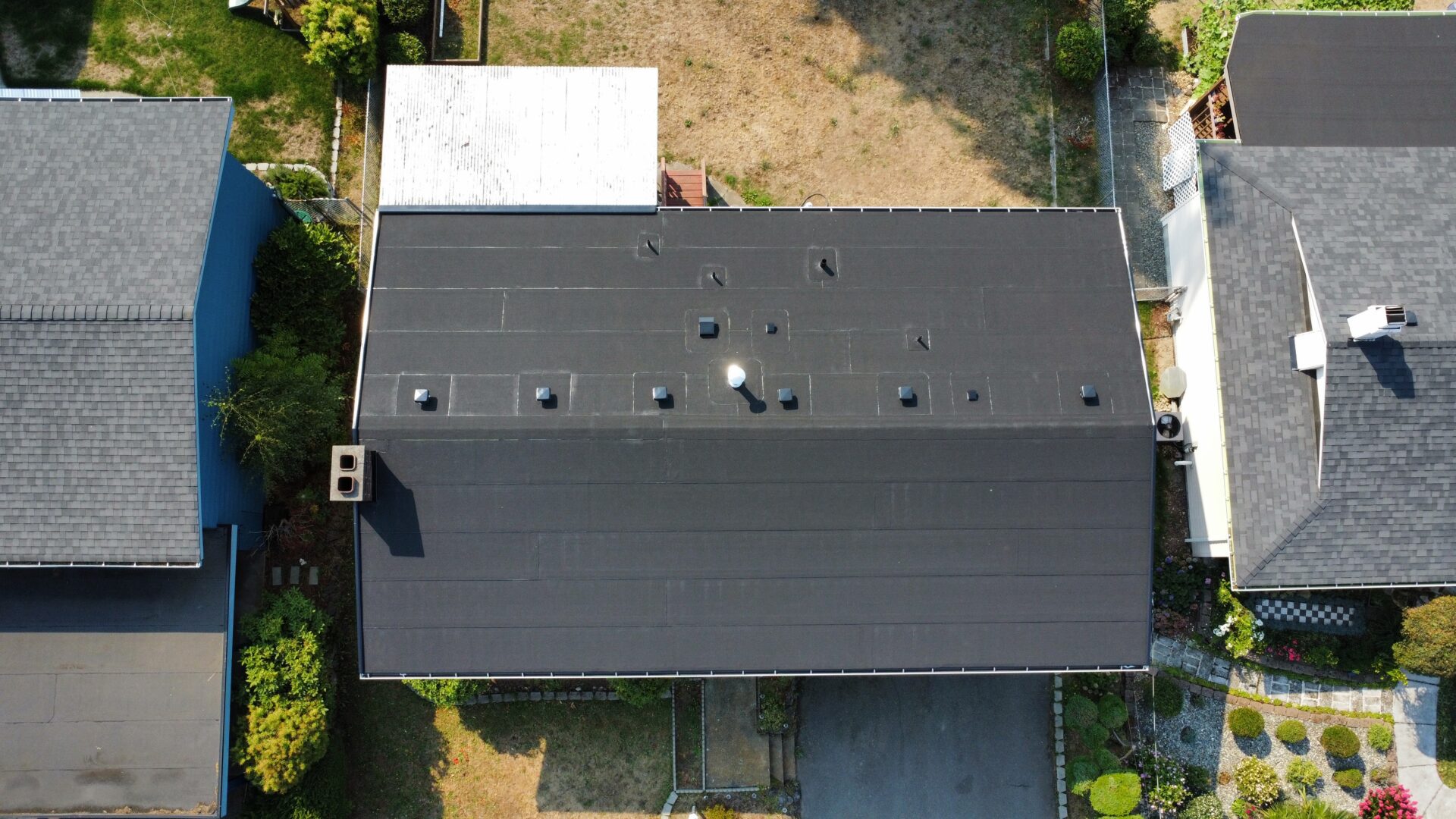
EPDM is a synthetic rubber membrane that has been used on flat roofs for decades. It is flexible, durable, and affordable. The main drawback is that EPDM seams are adhesive-bonded rather than heat-welded, making them the most likely failure point over time.
Cost: $5 to $8 per square foot installed
Lifespan: 15 to 25 years
When Does a Flat Roof Make Sense in the PNW?
Flat roofs work well for specific applications in the Seattle area:
- Modern and contemporary home designs where horizontal rooflines are architecturally essential
- Home additions and extensions where tying into an existing pitched roof is impractical or too expensive
- Garages and accessory structures where low profile and cost efficiency matter
- Rooftop living space including decks, patios, and green roof installations
- Commercial buildings where equipment access and interior ceiling height are priorities
Flat roofs are less ideal when the structure has no internal drain access, when the budget does not include regular maintenance, or when the homeowner wants a 40+ year material with minimal upkeep (in which case metal roofing or composite roofing on a pitched frame is a better fit).
Get Expert Flat Roof Advice
K Single Corp installs and repairs flat roofing systems across the Greater Seattle area. We will help you determine whether a flat roof is the right fit for your project, recommend the best membrane material, and design a drainage system that handles PNW rainfall reliably.
Request a free consultation or call (206) 659-4349 to discuss your flat roof project.