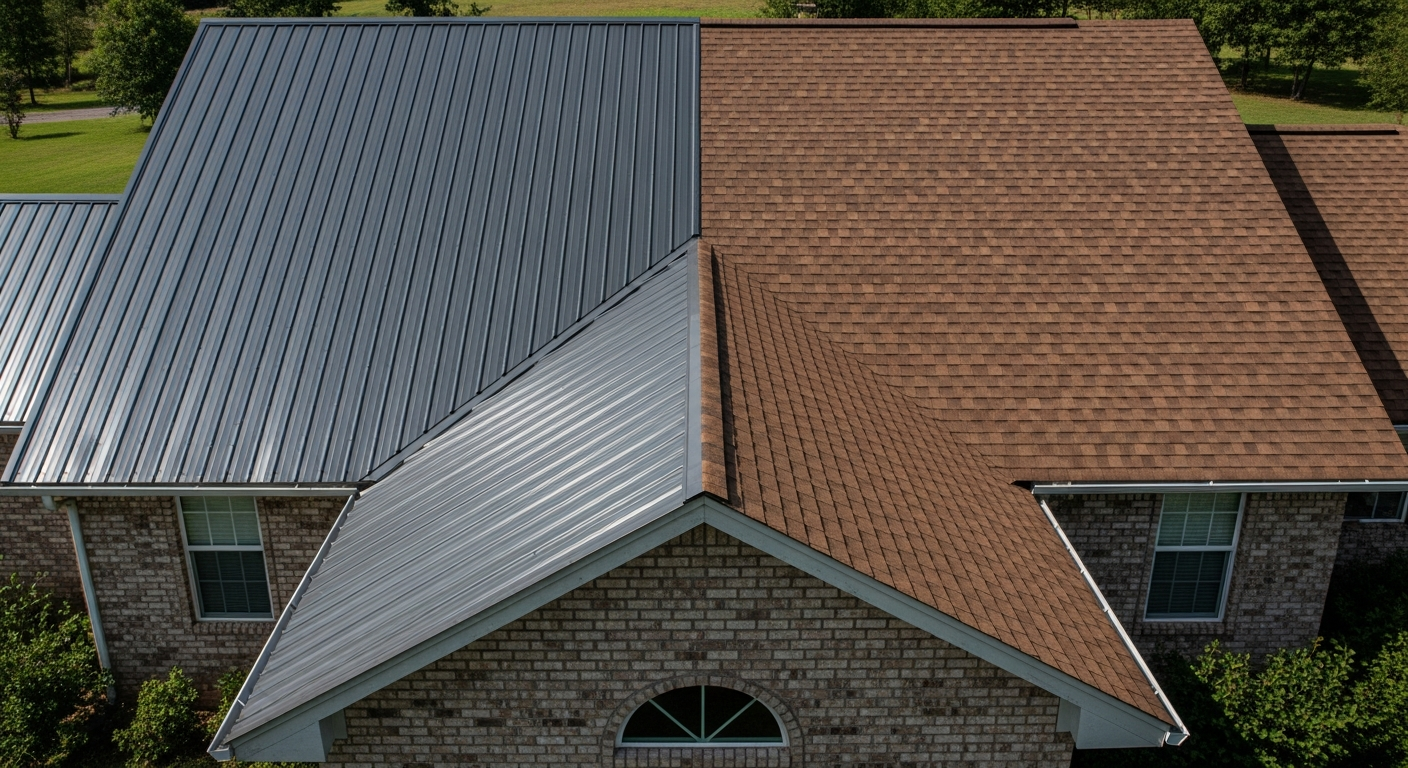
Metal roofing lasts 40 to 70 years and costs $15,000 to $30,000 installed, while asphalt shingles last 20 to 30 years and cost $8,000 to $15,000. Metal wins on longevity, energy efficiency, and PNW rain performance. Shingles win on upfront affordability and the widest range of style options. The right choice depends on how long you plan to stay in your home and how much you want to invest upfront.
Both materials work well in Seattle’s climate when properly installed. Here is a detailed comparison to help you decide.
Metal Roofing vs Asphalt Shingles
Cost Comparison
The upfront price difference is the first thing most homeowners notice. But upfront cost only tells part of the story.
Composition shingles are the more affordable option by a significant margin. For an average Seattle home, a full tear-off and shingle replacement runs $8,000 to $15,000. Architectural shingles (the standard today) cost about $350 to $550 per roofing square installed.
Metal roofing costs roughly twice as much upfront. Standing seam panels run $800 to $1,400 per square installed. Metal shingle products (designed to look like traditional shingles) cost $500 to $900 per square, a middle ground between asphalt shingles and standing seam.
Lifetime Cost Analysis
When you factor in how many times each roof needs replacement over 50 years, the cost picture shifts.
Over a 50-year period, a homeowner with shingles will likely need two full replacements (at year 0 and year 22-25). That is $16,000 to $30,000 in total roofing cost, plus the disruption and risk of a second major project.
A metal roof installed once covers the same 50 years for $15,000 to $30,000 with minimal maintenance. On a per-year basis, metal often costs less.
Lifespan and Durability
This is where metal roofing’s advantage is most dramatic.
Composition shingles: 20 to 30 years in the PNW. The wet climate, moss growth, and UV exposure tend to push lifespans toward the lower end of that range without diligent maintenance.
Metal roofing: 40 to 70 years. Metal does not absorb water, does not grow moss easily, and does not lose granules. The primary failure point is fastener and sealant degradation, which is easily addressed with periodic inspections.
How PNW Weather Affects Each Material
Seattle’s climate creates specific challenges that affect shingles more than metal.
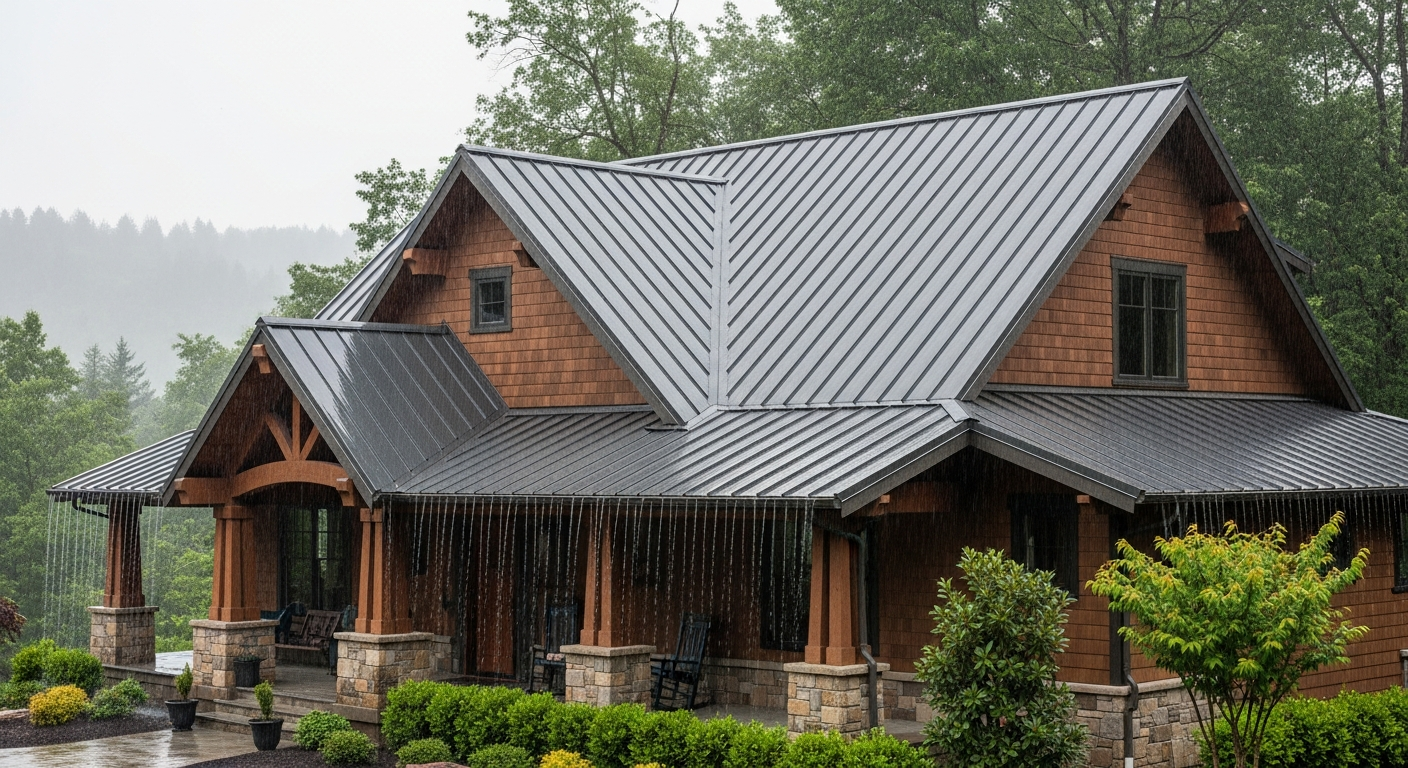
Moisture cycling. Shingles absorb small amounts of water and then dry, expanding and contracting with each cycle. Over 150+ rainy days per year, this cycling accelerates wear. Metal does not absorb water at all.
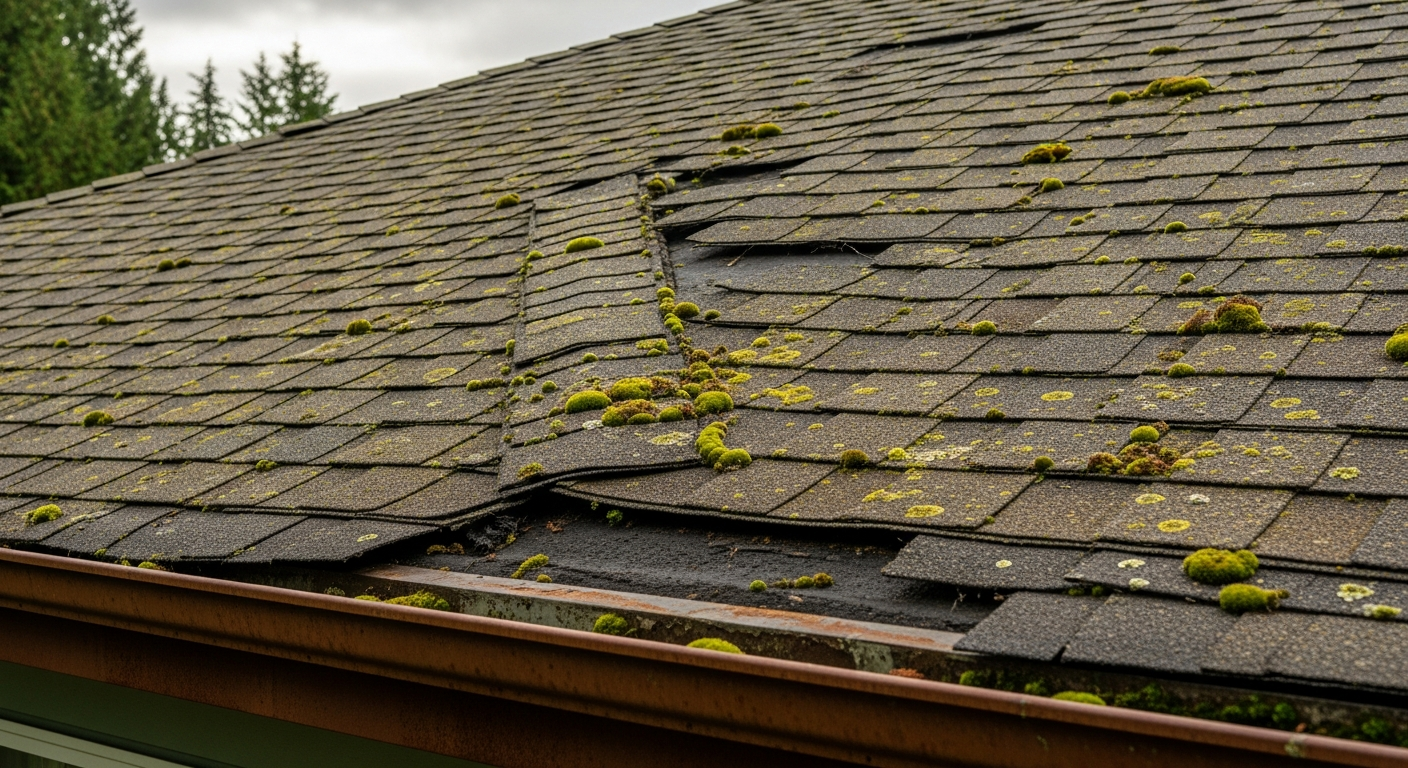
Moss growth. Moss roots under shingle tabs, trapping moisture and lifting edges. Metal’s smooth surface resists moss growth naturally. See our guide on the best roofing materials for PNW rain for more on this topic.
Wind resistance. Standing seam metal panels with concealed fasteners resist uplift better than shingles in most wind events. Shingles can lift and tear in 60+ mph gusts, common during PNW winter storms.
Energy Efficiency
Roofing material affects your home’s energy performance more than most homeowners realize.
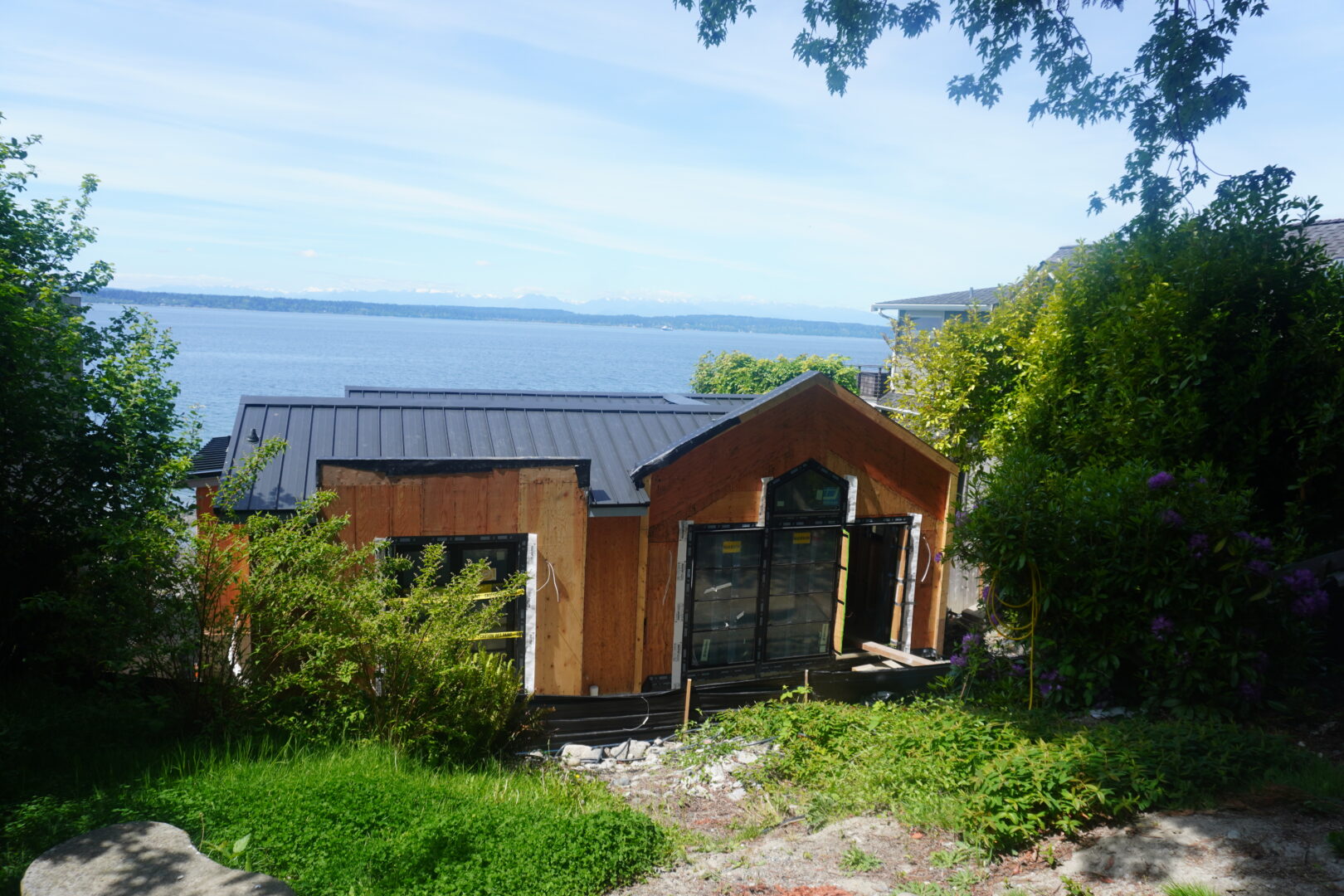
Metal roofing reflects solar radiation rather than absorbing it. Cool metal roof coatings can reflect up to 70% of solar energy, reducing cooling costs in summer. In winter, metal’s thermal performance depends on proper insulation underneath, but the material itself does not degrade insulation the way moisture-absorbing materials can.
Shingles absorb more heat, especially darker colors. Algae-resistant and cool-rated shingle options help, but shingles cannot match metal’s reflective performance.
For a deeper look at energy savings, read our guide on how a new roof saves on energy costs.
Appearance and Style Options
Both materials offer strong aesthetic options, but in different ways.
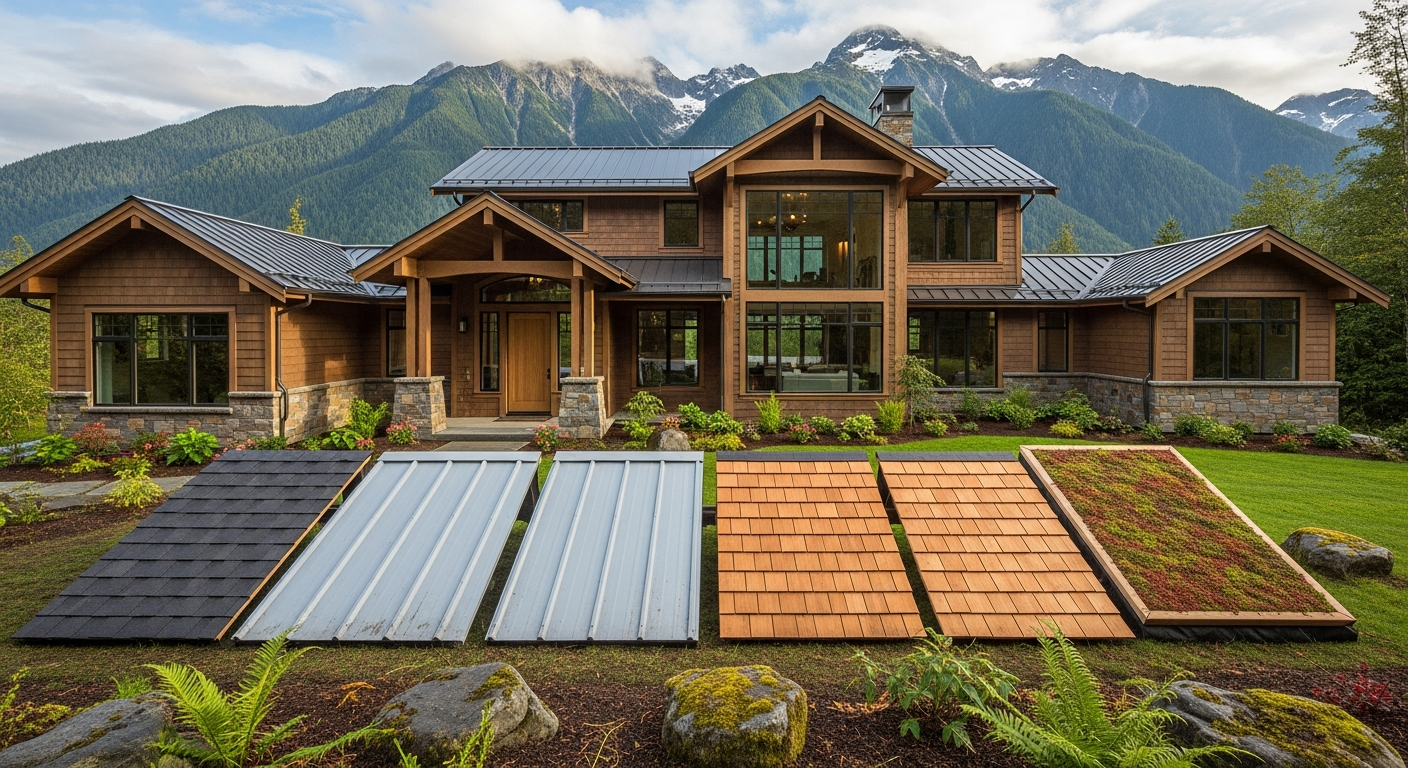
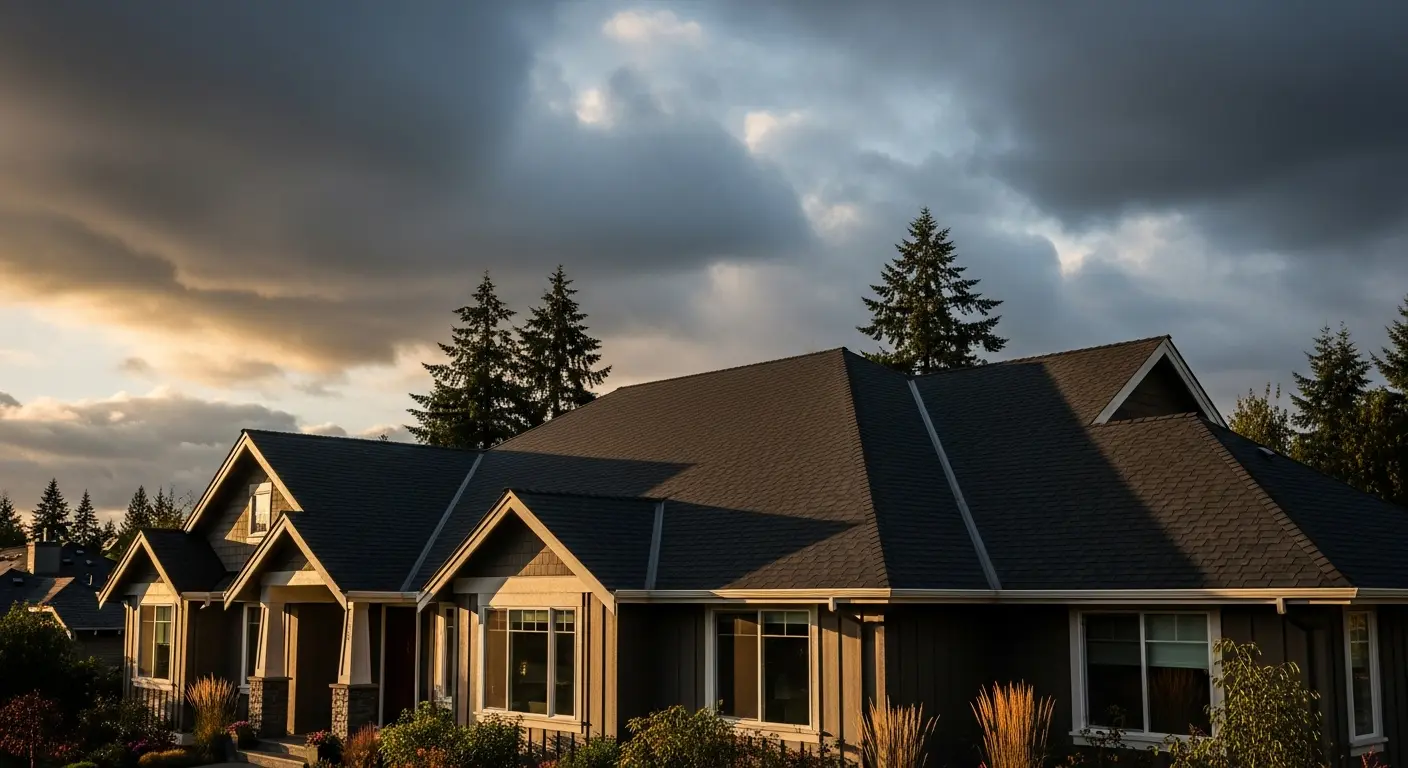
Shingles come in the widest variety of colors, profiles, and textures. From classic charcoal to weathered cedar looks, there is a shingle to match virtually any home style. This is the biggest advantage shingles have over metal.
Metal roofing has expanded its style options significantly. Standing seam offers a clean, modern look popular with contemporary and mid-century designs. Metal shingle products mimic the appearance of traditional shingles, slate, or cedar shake. Color options are more limited than shingles but cover all the popular neutral and earth tones.
Maintenance Requirements
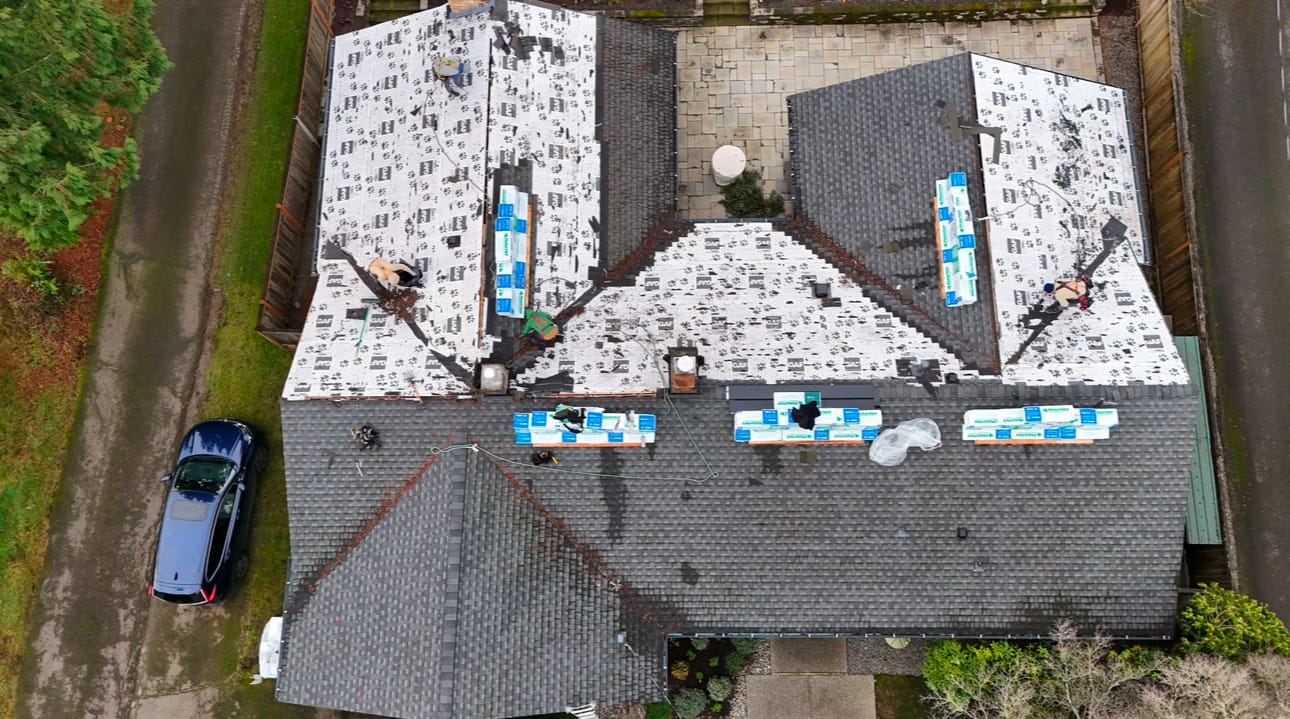
Shingles require periodic maintenance in the PNW. Moss cleaning every 2 to 3 years ($300 to $600), gutter cleaning, and annual visual inspections are standard. Damaged shingles need replacement before the next rain season.
Metal roofing is close to maintenance-free. Annual inspections to check fasteners and sealants, occasional debris removal from valleys, and gutter cleaning cover it. No moss treatments, no granule loss to monitor, no shingle replacement.
Over 25 years, shingle maintenance costs add $3,000 to $7,000 to the total cost of ownership. Metal maintenance over the same period runs $500 to $1,500.
Resale Value
Both materials add value when you sell, but the return differs.
Shingles return roughly 60% to 70% of their installed cost at resale. A $12,000 shingle roof adds about $7,000 to $8,500 to your home’s value.
Metal roofing returns 60% to 85% of installed cost and attracts buyers who value the remaining decades of protection. A $25,000 metal roof can add $15,000 to $21,000 to your home’s value. The “new metal roof” line in a listing description catches buyer attention.
Which One Should You Choose?
Choose Shingles If:
- Your budget is under $15,000
- You plan to sell within 10 years
- You want the widest range of color and style options
- You are comfortable with periodic moss maintenance
- Your roof has a simple design with low to moderate pitch
Choose Metal If:
- You plan to stay in your home for 15+ years
- You want minimal long-term maintenance
- You value energy efficiency and environmental sustainability
- Your home suits a modern or contemporary aesthetic
- You want the best rain performance available
Consider Metal Shingles If:
- You want metal performance with a traditional shingle appearance
- Your budget falls between shingle and standing seam pricing
- Your neighborhood favors traditional roofing aesthetics
Get a Side-by-Side Quote
The best way to decide is to see actual pricing for your specific home. K Single Corp installs both composition shingles and metal roofing and can provide side-by-side estimates so you can compare the real numbers. Contact us for a free consultation or call (206) 659-4349.