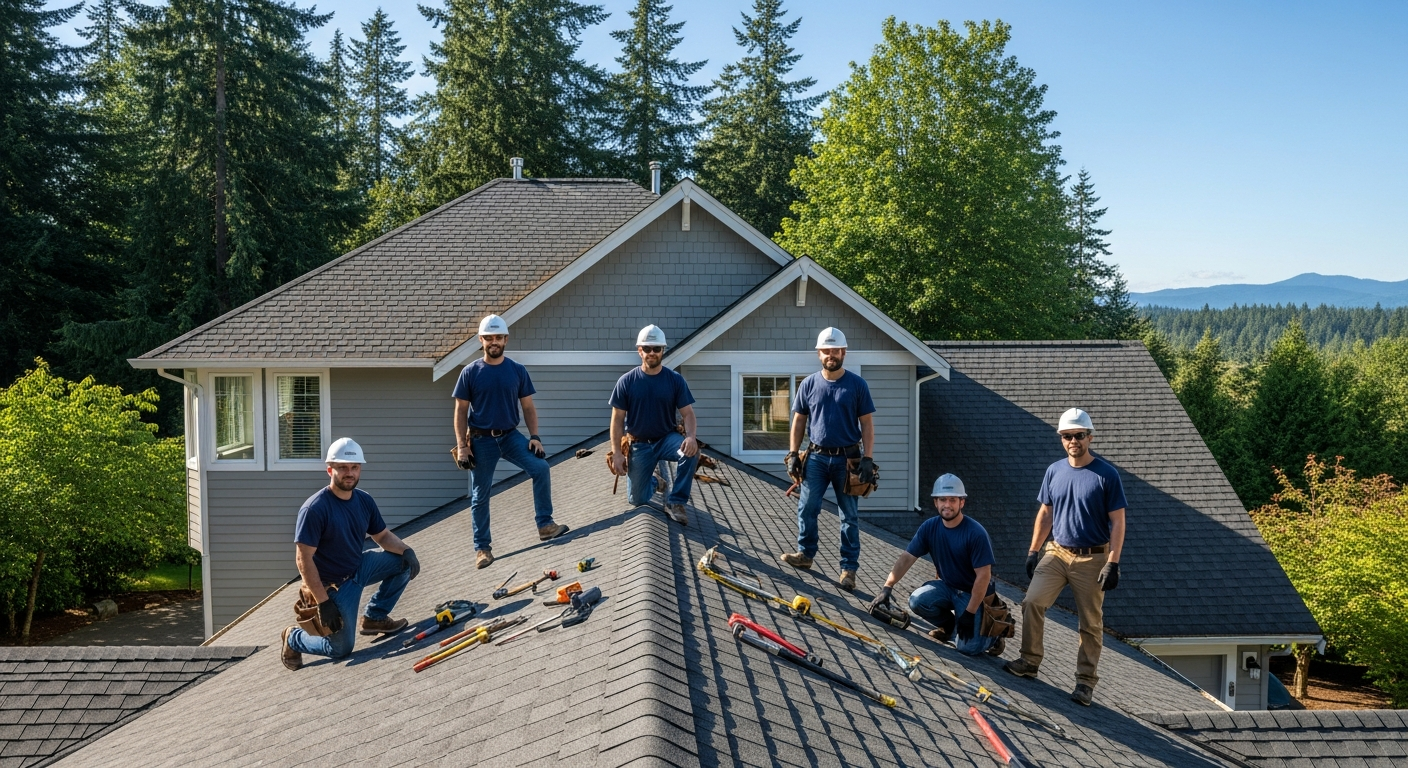
Choosing the right roofing contractor in Seattle starts with verifying their Washington state contractor license at lni.wa.gov, confirming they carry liability insurance and workers compensation, and getting at least three detailed written estimates. The right contractor will welcome your questions, provide documentation without hesitation, and never pressure you into a quick decision.
A new roof is one of the largest investments you will make in your home. The difference between a great contractor and a bad one can mean decades of reliable protection versus years of callbacks, leaks, and frustration. Here is how to find and vet the right roofer for your project.
What Your Warranty Covers
Step 1: Verify Their License
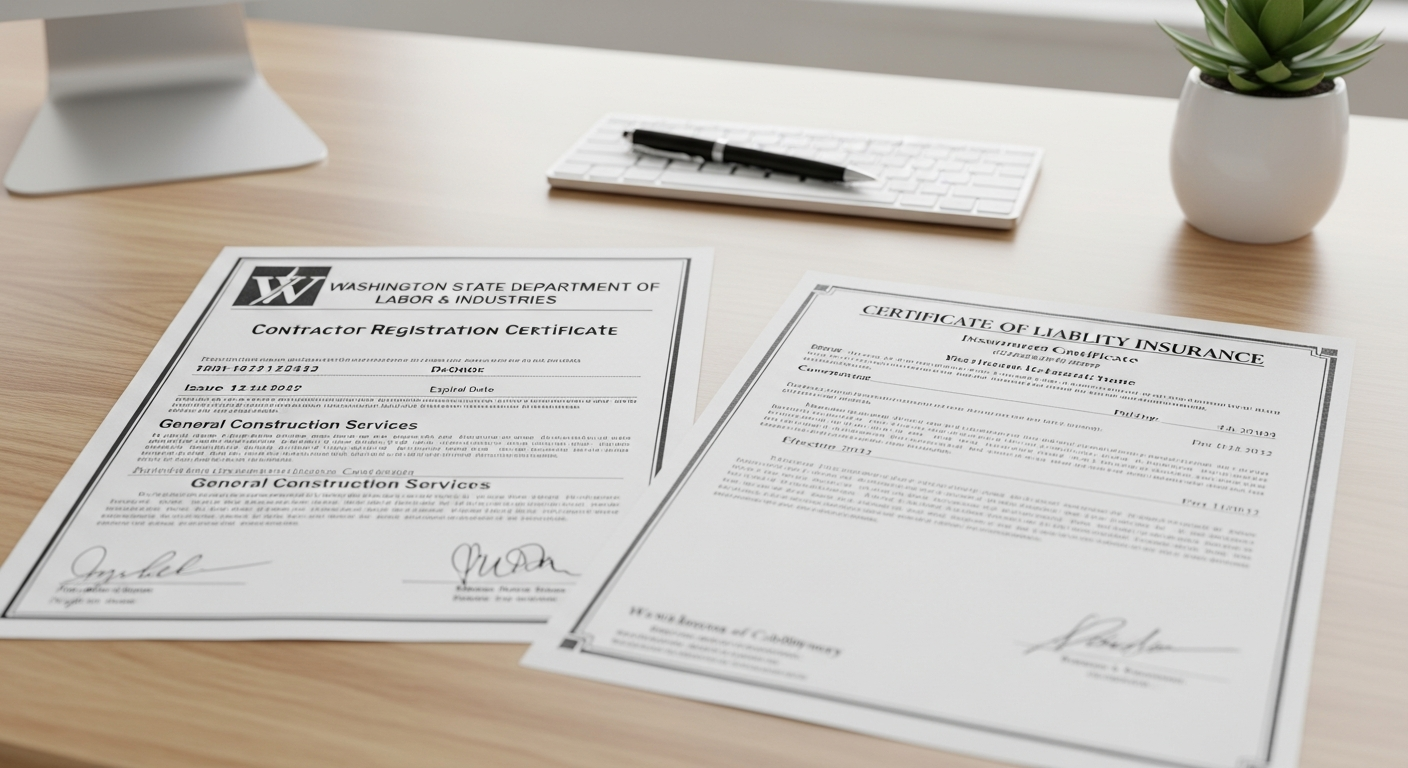
Washington state requires all contractors performing work valued at $500 or more to hold an active contractor registration with the Department of Labor and Industries (L&I).
What to check on lni.wa.gov:
- License status (must show “Active”)
- Bond amount (minimum required by law, but higher is better)
- Insurance status (must be current)
- Complaint history (look for patterns, not just isolated complaints)
- How long the license has been active (longer is better)
A contractor who cannot or will not provide their license number is not someone you want on your roof. Period.
Step 2: Confirm Insurance Coverage
A legitimate roofing contractor carries two types of insurance. Both are non-negotiable.

General liability insurance covers damage to your property during the project. If a crew member drops a tool through your skylight or damages your siding during tear-off, liability insurance pays for the repair.
Workers compensation insurance covers injuries to crew members while working on your property. Without it, you could be held liable if a worker falls off your roof.
Ask for a Certificate of Insurance (COI) and verify it is current. Call the insurance company directly if you want extra assurance. Any contractor who hesitates to provide proof of insurance is not worth your time.
Step 3: Get Multiple Written Estimates
Get at least three written estimates from licensed contractors. This gives you a realistic price range and helps you spot outliers, both high and low.
What a good estimate includes:
- Material brand, product line, and color
- Number of roofing squares (100 sq ft each)
- Underlayment type and specification
- Flashing scope (drip edge, step flashing, valley flashing, pipe boots)
- Ventilation plan (ridge vent, soffit vents, or powered vents)
- Tear-off details (number of layers, disposal method)
- Decking inspection and repair policy (cost per sheet if rot is found)
- Permit inclusion
- Warranty terms (manufacturer and workmanship, separate)
- Projected start date and completion timeline
- Payment schedule
Make sure each estimate covers the same scope so you are comparing fairly. If one contractor includes a full ventilation upgrade and another does not, the prices are not comparable.
Step 4: Check Reviews and References
Online reviews are helpful but not the whole picture. Look at patterns across multiple platforms.
Where to check:
- Google Business reviews (look for volume and consistency)
- BBB (Better Business Bureau) rating and complaint history
- Yelp reviews (filter for roofing-specific feedback)
- Nextdoor recommendations from your actual neighborhood
What to look for in reviews:
- Consistent positive feedback over years (not just a recent burst)
- Specific details about the work, not generic praise
- How the contractor responds to negative reviews
- Mentions of communication, cleanliness, and timeline adherence
Ask for references from recent local projects. A contractor with 15,000+ completed projects should have no trouble providing three to five recent references in your area. Call them. Ask if the project finished on time, on budget, and if any issues came up after completion.
Step 5: Ask the Right Questions
Before signing anything, ask these questions. The answers will tell you a lot about how the contractor operates.
“Who will supervise the crew on my roof?” You want a dedicated project manager or foreman on site, not just a sales rep who disappears after the contract is signed.
“How do you handle unexpected repairs?” Rotted decking is common in Seattle. A good contractor has a clear policy: “We charge $X per sheet of plywood replaced, and we will call you for approval before proceeding if we find damage beyond Y sheets.”
“What is your warranty?” Understand the difference between the manufacturer warranty (covers the material) and the workmanship warranty (covers the installation). Both matter. K Single Corp offers a 10-year workmanship warranty backed by 30-year material warranties.
“Will you pull the permit?” The answer should always be yes for a full replacement. If they say no, walk away.
“What is your payment schedule?” Legitimate contractors ask for a small deposit (10% to 15%) with the balance due upon completion or in milestone payments. Never pay the full amount before work begins.
Red Flags to Watch For
These are warning signs that should disqualify a contractor immediately.
Door-to-Door Solicitation After Storms
“Storm chasers” travel from region to region following severe weather, offering quick repairs at low prices. They collect deposits, do substandard work (or no work at all), and move on before problems surface. They will not be around to honor a warranty.
Pressure to Sign Immediately
“This price is only good today” is a classic high-pressure sales tactic. A reputable contractor’s pricing is based on materials and labor, not artificial urgency. Any contractor who pressures you to sign before you have had time to compare bids is not acting in your interest.
Cash-Only or Full Payment Upfront
Cash-only requests often indicate the contractor is trying to avoid taxes or does not have a legitimate business bank account. Full prepayment requests mean you lose all leverage if the work is not completed or done poorly.
No Physical Office or Local Presence
Search for the contractor’s physical address. A P.O. box alone is not sufficient. Established local contractors have a physical location, a local phone number, and a presence in the community. K Single Corp has operated from 14996 21st Ave SW, Burien, WA 98166 since 2007.
Unwillingness to Provide References
A contractor who has been in business for more than a few years should have dozens of satisfied customers willing to speak on their behalf. If they cannot provide references, there is a reason.
Your Vetting Checklist
Before signing a contract, verify each of these items.
- Active Washington state contractor license (verified at lni.wa.gov)
- Current general liability insurance (COI provided)
- Current workers compensation insurance (COI provided)
- Detailed written estimate matching your project scope
- At least three recent references contacted
- Positive review history across multiple platforms
- Written contract with materials, timeline, payment, and warranty terms
- Permit responsibility clearly assigned to the contractor
- Workmanship warranty of 5+ years (K Single Corp offers 10 years)
Ready to Get Started?
K Single Corp has been serving Seattle-area homeowners since 2007 with over 15,000 completed projects. We are licensed, bonded, insured, BBB accredited, and manufacturer certified. Contact us for a free estimate or call (206) 659-4349. We welcome your questions and your scrutiny.