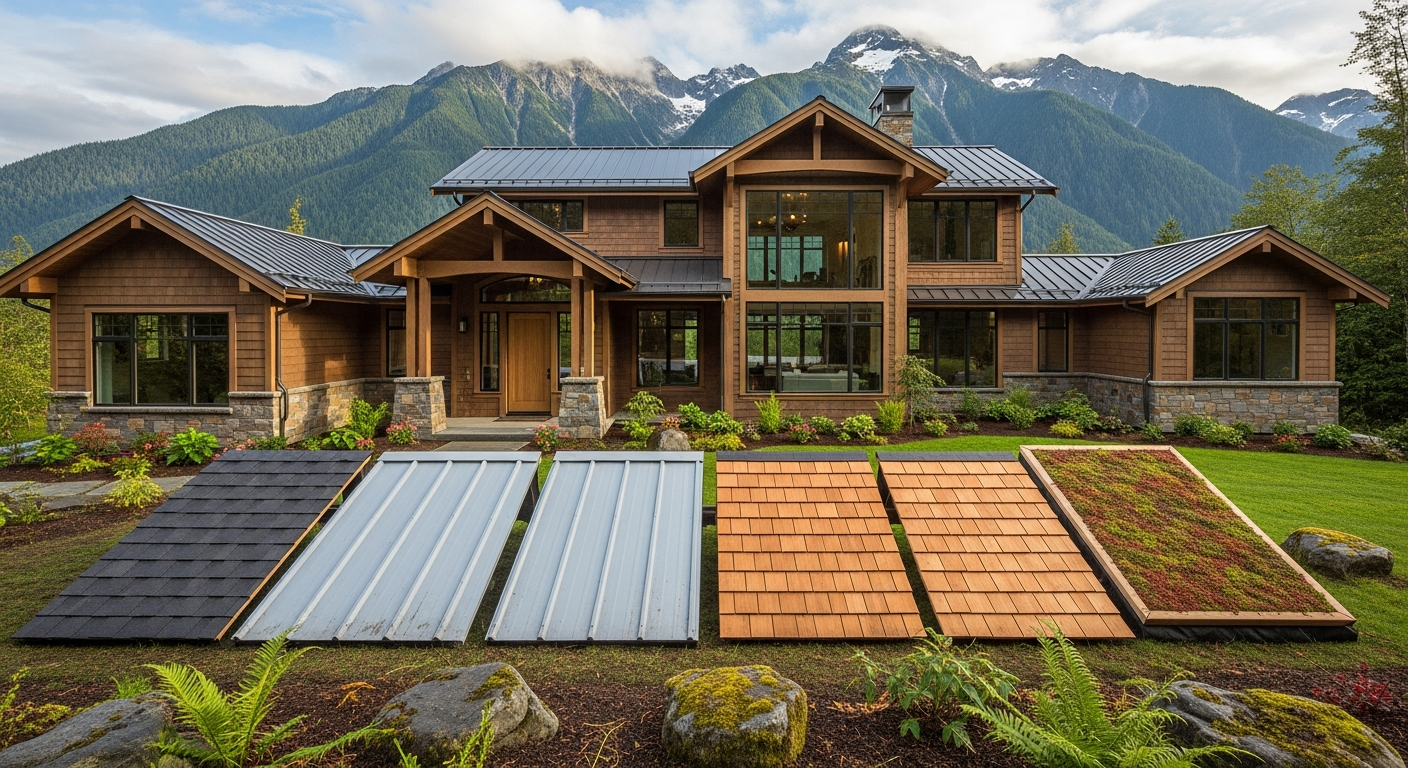
The best roofing material for the Pacific Northwest is metal roofing for homeowners who prioritize longevity and zero-maintenance rain performance, or composition shingles for those who want proven protection at a lower upfront cost. Seattle’s 37 inches of annual rain, persistent moisture, and moss-friendly conditions make material choice more important here than in most U.S. markets.
After 25+ years of installing roofs across King, Snohomish, and Pierce counties, we have seen how each material performs over time in real PNW conditions. Here is how the top options compare.
How PNW Weather Challenges Your Roof
Before comparing materials, it helps to understand what makes the Pacific Northwest uniquely demanding for roofing.
Seattle does not get the heaviest rainfall in the country (that goes to cities in the Southeast), but the sheer frequency of moisture is the challenge. Your roof spends more time wet than dry for roughly half the year. This creates three problems that do not affect roofs in drier climates.
Persistent moisture. Roofing materials in the PNW rarely fully dry out from October through April. Materials that absorb water (wood, some composites) degrade faster here than their rated lifespan suggests.
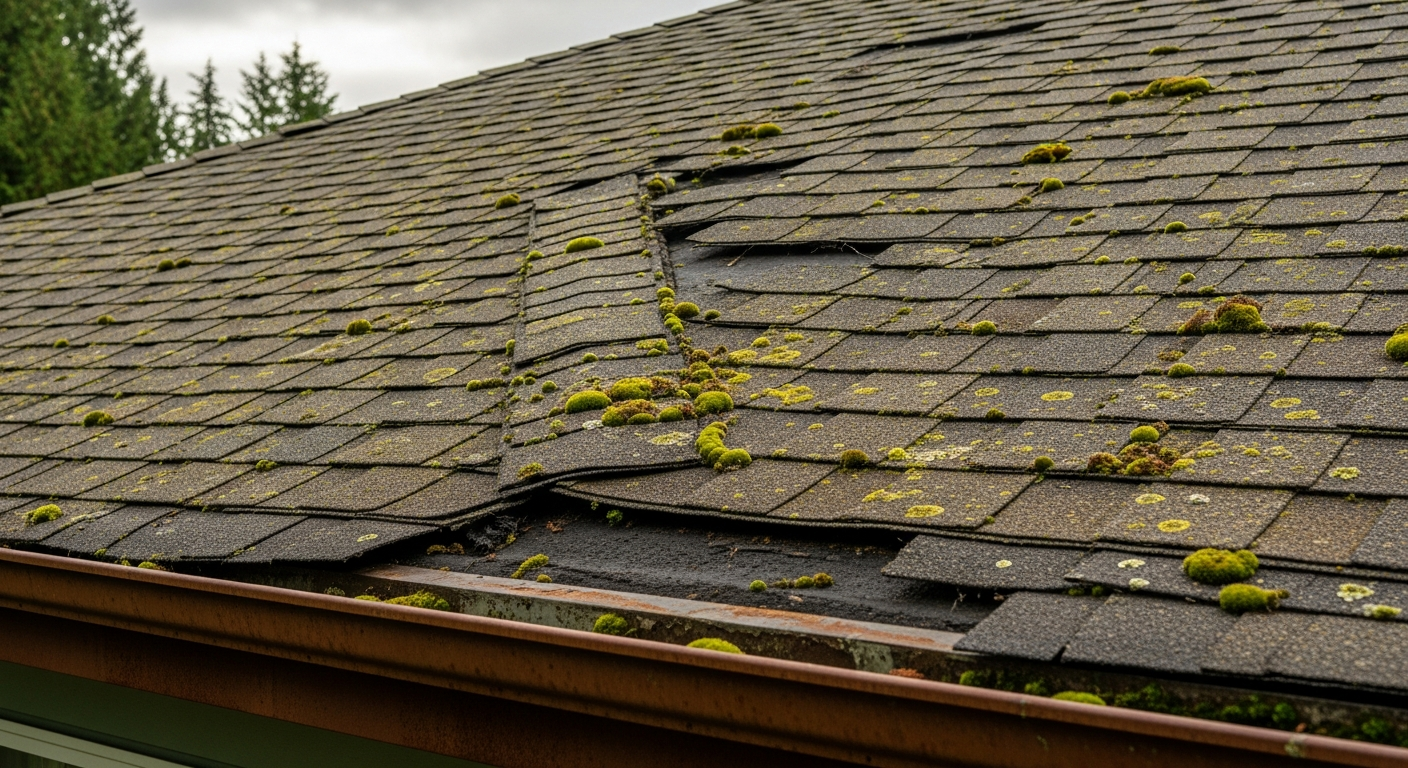
Moss and algae. The combination of moisture, moderate temperatures, and shade from evergreen trees creates ideal conditions for moss. Left untreated, moss roots lift shingles, trap water, and accelerate decay.
Wind-driven rain. Pacific storms push rain horizontally, not just vertically. This tests flashing details, valleys, and material overlap patterns more aggressively than straight rainfall.
Roofing Material Lifespan Comparison
Ranking the Best Roofing Materials for PNW Rain
1. Metal Roofing: Best Overall for PNW Performance
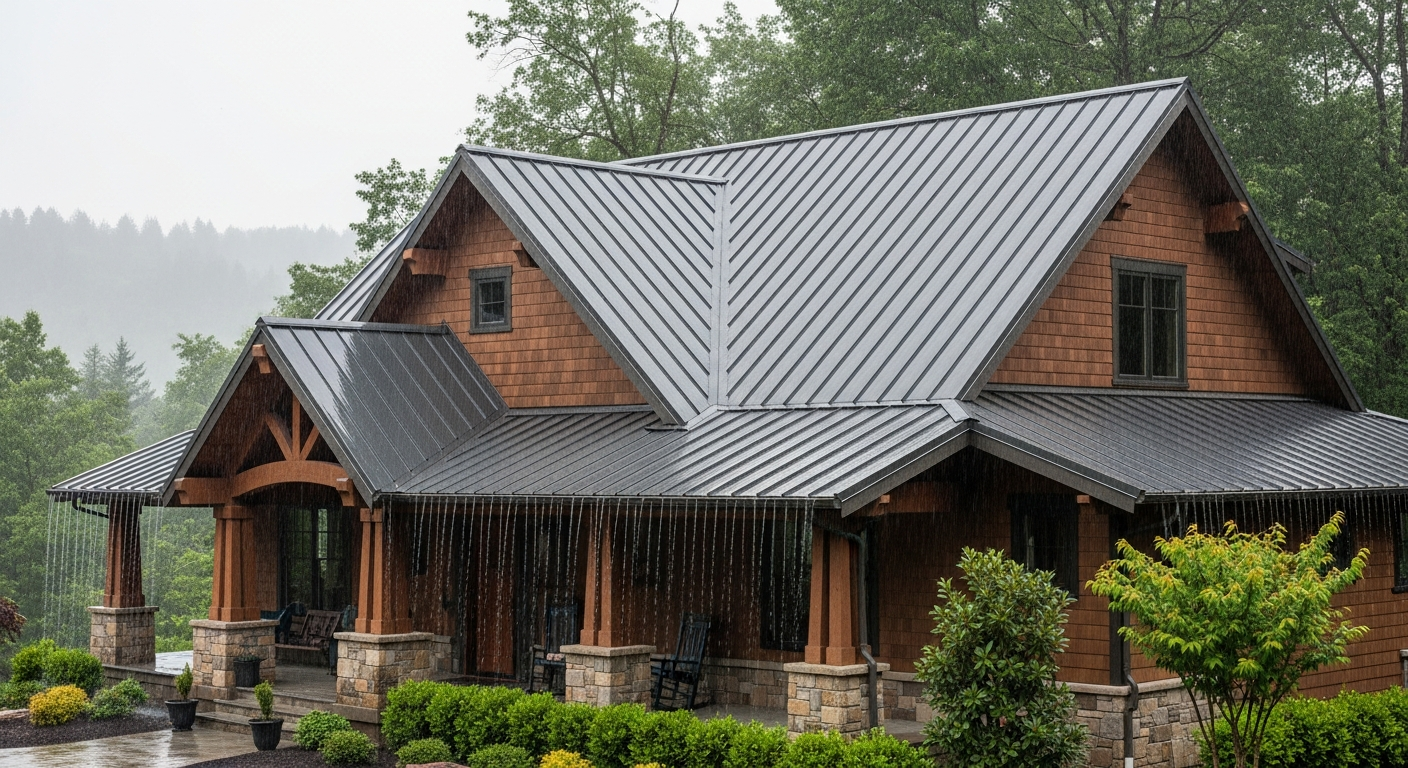
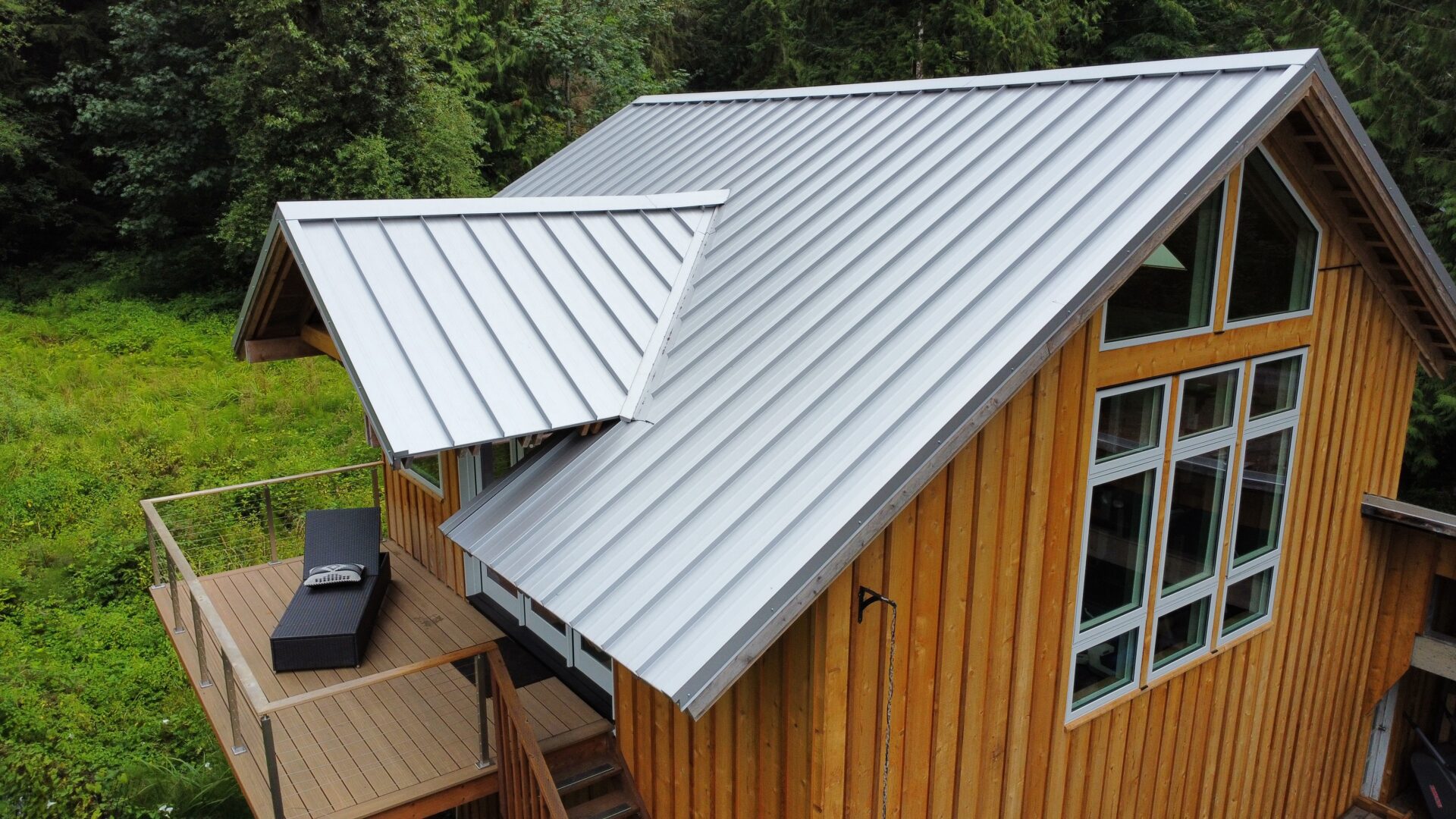
Metal is the clear winner for rain performance in the Pacific Northwest. Standing seam panels create a continuous, watertight surface that sheds water instantly. There is no absorption, no granule loss, and moss struggles to grip the smooth surface.
PNW advantages:
- Zero water absorption. Rain runs off immediately.
- Naturally moss-resistant. The smooth surface gives moss nothing to grip.
- Handles wind loads well. Concealed fastener systems resist uplift.
- Lightweight. Does not add structural stress, important for older Seattle homes.
- Energy efficient. Reflects heat in summer, performs well with proper insulation in winter.
PNW disadvantages:
- Higher upfront cost ($15,000 to $30,000 for most homes).
- Rain noise can be louder without proper underlayment and insulation.
- Requires skilled installation. Not every contractor has metal roofing experience.
For a detailed cost and performance breakdown, see our metal roofing guide or our comparison of metal roofing vs. asphalt shingles.
2. Composition Shingles: Best Value for PNW Homes
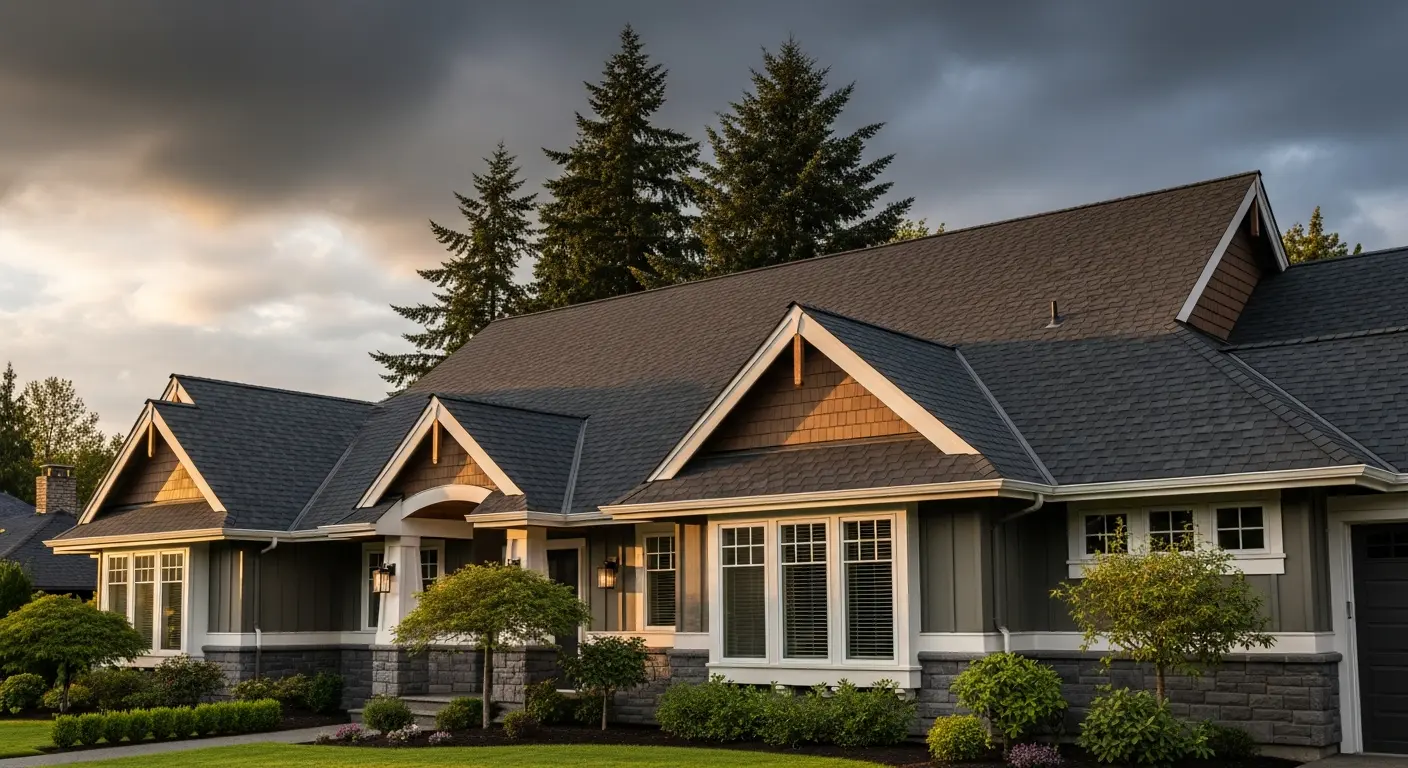
Composition (asphalt) shingles are the most common roofing material in the Seattle area for good reason. Modern architectural shingles handle PNW rain well, come in dozens of colors, and cost significantly less than metal or cedar.
PNW advantages:
- Affordable. $8,000 to $15,000 for most homes.
- Wide availability. Every roofing contractor in Seattle installs shingles.
- Algae-resistant options. Most major brands now offer AR (algae-resistant) shingles standard.
- Good wind ratings. Class H shingles resist winds up to 150 mph.
- 20 to 30 year lifespan with proper ventilation and maintenance.
PNW disadvantages:
- Absorbs some moisture, which accelerates granule loss over time.
- Moss grows on shingles in shaded areas and requires periodic cleaning.
- Shorter lifespan than metal or composite in wet climates.
For more details, see our composition shingle roofing guide.
3. Composite/Synthetic Roofing: Best Low-Maintenance Option
Synthetic composite shingles are engineered to look like slate or cedar shake but perform like modern polymers. They resist moisture, moss, and impact better than natural materials.
PNW advantages:
- Extremely moisture resistant. Engineered polymers do not absorb water.
- Moss-resistant surface. Less porous than natural materials.
- Lightweight. Can go on structures that cannot support real slate or tile.
- 30 to 50 year lifespan.
- Impact resistant. Class 4 rated products handle hail and debris.
PNW disadvantages:
- Higher cost than shingles ($12,000 to $25,000).
- Newer technology. Less long-term track record in PNW specifically.
- Fewer contractors experienced with synthetic installation.
Learn more in our composite roofing guide.
4. Cedar Shake: Classic PNW Aesthetic, Higher Maintenance
Cedar shake is the traditional Pacific Northwest roofing material. It looks stunning on craftsman and mid-century homes throughout Seattle’s neighborhoods. But it demands more attention in our wet climate than any other material.
PNW advantages:
- Natural beauty that ages into the classic silver-gray PNW look.
- Good insulation value (R-value of 1.5 to 2.0, higher than shingles).
- Naturally rot-resistant when properly maintained.
- Historic and neighborhood appropriate for many Seattle areas.
PNW disadvantages:
- Absorbs moisture, promoting moss, algae, and eventual rot.
- Requires professional cleaning and treatment every 3 to 5 years.
- Fire concern. Some jurisdictions restrict untreated cedar.
- Shorter effective lifespan (20 to 30 years) in wet climates vs. dry climates (30 to 40 years).
- Higher installed cost ($18,000 to $35,000).
For details, see our cedar shake roofing guide.
5. Flat/TPO Roofing: Best for Low-Slope Sections
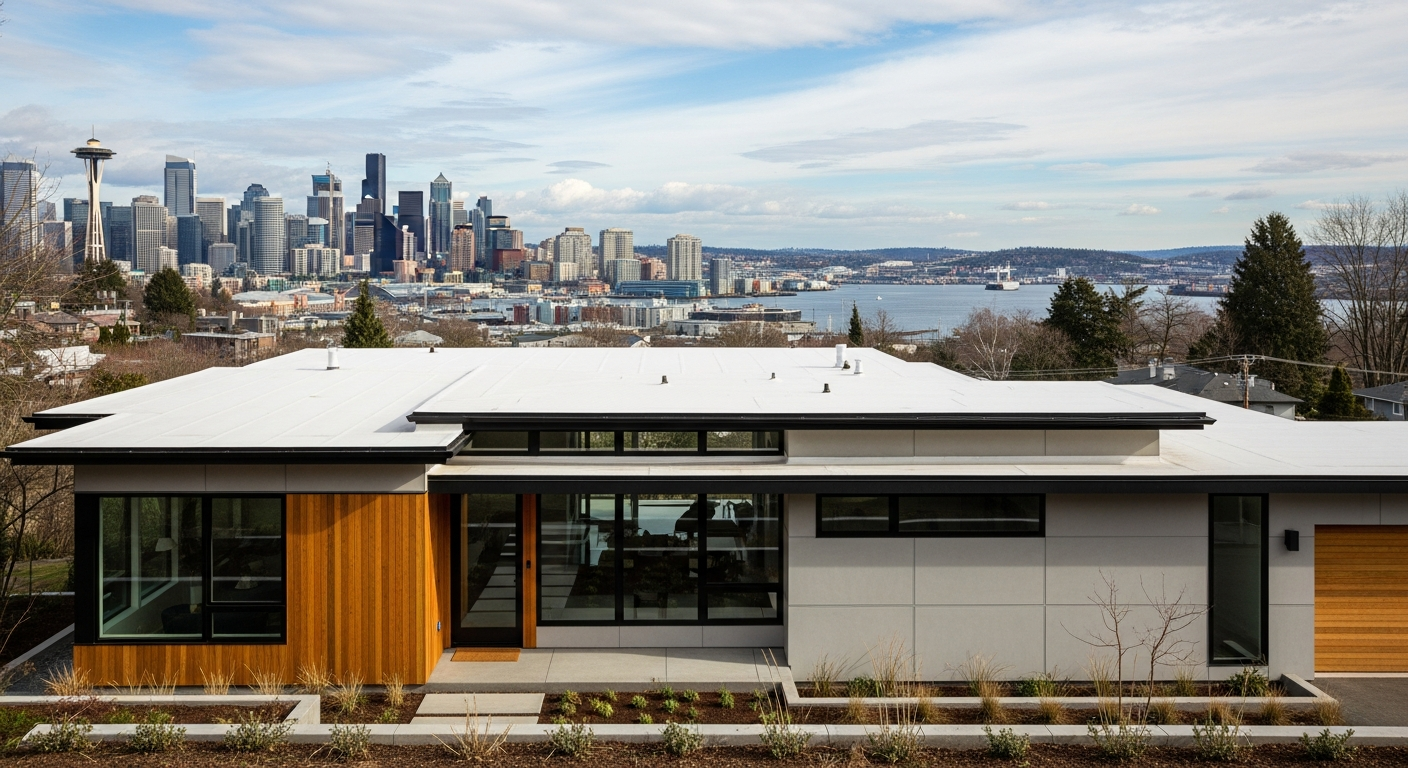
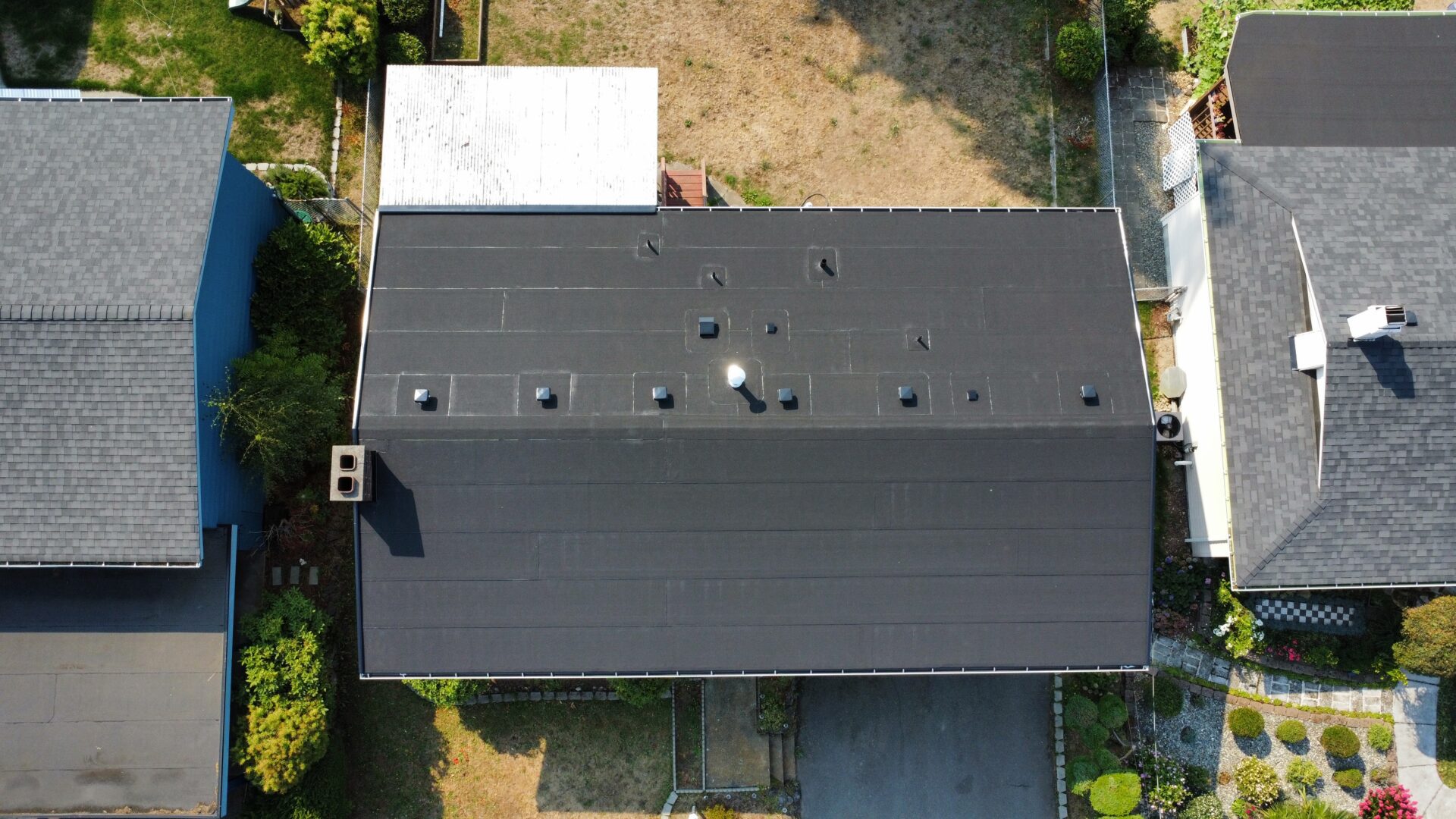
Many Seattle homes, especially mid-century modern and contemporary designs, have flat or low-slope roof sections. TPO (thermoplastic polyolefin) and PVC membranes are the go-to materials for these applications.
PNW advantages:
- Seamless, welded seams eliminate water entry points.
- Reflective white surface helps with energy efficiency.
- Handles ponding water better than sloped roofing materials.
- 20 to 30 year lifespan with proper installation.
PNW disadvantages:
- Drainage design is critical. Poor slope = standing water = premature failure.
- Requires specialized installation equipment and training.
- Limited aesthetic options (mostly white or light gray).
For more information, see our flat roofing guide.
Moss Prevention: A PNW-Specific Priority
Regardless of which material you choose, moss management is part of roof ownership in the Pacific Northwest. Here are the most effective prevention strategies.
Zinc or copper strips. Install metal strips along the ridge line. When rain washes over them, trace metals flow down the roof and inhibit moss growth. This is inexpensive ($200 to $500 installed) and effective.
Tree trimming. Moss thrives in shade. Keeping branches 6 to 10 feet away from your roof increases sunlight exposure and air circulation, dramatically reducing moss growth.
Professional cleaning. Schedule a professional roof cleaning every 2 to 3 years. Soft wash methods remove moss without damaging shingle granules. Never pressure wash a shingle roof.
Algae-resistant materials. Choose shingles with copper-infused granules (labeled “AR” by most manufacturers) or naturally moss-resistant materials like metal or composite.
Making Your Decision
The right material depends on your budget, your home’s architecture, and how long you plan to stay. Here is a quick decision framework.
Choose metal if: You want maximum longevity, minimal maintenance, and the best rain performance. You are willing to pay more upfront for a 40 to 70 year roof.
Choose composition shingles if: You want proven, affordable performance. You are comfortable with periodic moss maintenance. You want the widest range of color and style options.
Choose composite if: You want the look of natural materials without the maintenance. You want impact resistance and a 30 to 50 year lifespan.
Choose cedar shake if: You want the traditional PNW aesthetic and are committed to regular maintenance and treatment.
Need help deciding? Contact K Single Corp for a free consultation. We will inspect your roof, discuss your priorities, and recommend the best material for your specific home and budget. We serve homeowners across Seattle, Bellevue, Kirkland, and the greater Puget Sound area.